
Still Hungry an Hour After Eating? Here Is What Your Body Is Trying to Tell You
Quick Summary: If you feel hungry again within 60 minutes of eating, the problem is almost never how much you ate — it is what you ate. Meals low in protein, fiber, and healthy fat cause a blood sugar spike and crash that leaves your stomach growling before your plate is even washed. The fix is not more food. It is a better meal composition.
You just finished a full bowl of oatmeal or a slice of toast with peanut butter. Maybe you even had a banana on the side. You sat down, you ate, and you thought: that should hold me. An hour later, your stomach has other plans.
If this sounds familiar, you are not alone — and you are definitely not broken. For moms who are already trying to eat better, this cycle of eating and almost immediately feeling hungry again creates real frustration and a lot of unnecessary guilt.
Here is what is important to know upfront: this is not a willpower issue. It is not a portion issue. It is almost always a meal composition or timing issue, and it is completely fixable once you understand what your body actually needs to feel satisfied.
In this post, I am breaking down exactly why this happens, what to do about it, and what a genuinely satisfying meal looks like — without adding more food to your plate. I have worked through this pattern with 100+ clients, and the shift is almost always simpler than they expect.
Why Are You Hungry Again So Soon After Eating?
Feeling hungry an hour after eating is almost always caused by a meal that is low in protein, low in fiber, and high in refined carbohydrates — not a meal that was too small.
Here is the most common pattern I see with clients: Sara came to me eating a full bowl of oatmeal with fruit every single morning. It was a generous portion, and she was doing everything she thought was "healthy." But she was starving by 9am. The oatmeal and fruit combination is almost entirely carbohydrates. Without protein or much fat to slow digestion down, her blood sugar spiked quickly after eating — and then crashed just as fast, triggering hunger signals again before she even made it to her second cup of coffee.
Research supports this: a 2021 review in Nature Metabolism found that higher protein and fiber meals significantly improve satiety compared to meals with the same calorie count but lower nutrient density. Separate studies on dietary protein and meal composition confirm that what you eat matters far more than how much you eat when it comes to feeling full.
The main culprits behind early hunger include:
Low protein at the meal
Low fiber content
High refined carbohydrates (white bread, sugary cereals, most granola bars)
Eating too quickly
Eating while distracted, so your brain never fully registers the meal

How Does Protein Keep You Full?
Protein keeps you full by slowing digestion and triggering satiety hormones like GLP-1 and PYY, which signal your brain that you have eaten enough. It is the single most filling macronutrient per calorie.
According to research on protein and satiety, higher protein meals reliably reduce hunger and calorie intake at the next meal. A review published in the American Journal of Clinical Nutrition found that protein increases satiety to a greater extent than either carbohydrates or fat, and may help reduce overall calorie intake throughout the day.
In my practice, I generally recommend:
20 grams of protein at breakfast
30 grams of protein at lunch and dinner
10 grams of protein at snacks
Back to Sara: once she cut her oats in half and stirred in one cup of plain Greek yogurt (which adds about 20g of protein), everything changed. She went from hungry at 9am to satisfied until noon. Same bowl. Same general meal. Completely different result — just by shifting the composition.
Easy protein additions that work in real mom life:
-Greek yogurt stirred into oatmeal or eaten on the side
-Two eggs added to any breakfast
-Cottage cheese as a base for sweet or savory toppings
-Rotisserie chicken added to lunch salads or grain bowls
-A scoop of protein powder blended into a smoothie
For more protein-rich meal ideas, see my high-protein breakfast guide, healthy snack guide for moms, and easy meal prep ideas for weight loss.
What Do Fiber and Fat Have to Do With Staying Satisfied?
Fiber slows gastric emptying, which means food moves more slowly from your stomach to your small intestine — keeping blood sugar steadier and hunger at bay longer.
Studies published in Foods and Journal of Functional Foods confirm that higher fiber intake is consistently linked to greater meal satisfaction and reduced hunger between meals.
Simple fiber sources that are actually realistic to use:
Berries, apples, or pears (eat the skin)
Beans and lentils
Chia seeds or flaxseed stirred into yogurt or smoothies
Roasted vegetables
Whole grain bread (look for at least 3g fiber per slice)
Now for the one that surprises most clients: fat is not the enemy of fullness. Fat slows digestion and contributes to satisfaction at meals. According to a 2018 systematic review in the European Journal of Clinical Nutrition, dietary fat contributes to satiety, particularly when consumed alongside fiber-rich carbohydrates, which is exactly how most balanced meals are built.
Think about the fat-free era for a moment. Those fat-free chips that somehow made you hungrier. The I Can't Believe It's Not Butter craze. Removing fat from food almost always means replacing it with sugar or refined starch, which is exactly what drives blood sugar crashes and early hunger.
Simple ways to add fat that actually help:
Half an avocado with eggs at breakfast
A tablespoon of peanut butter or almond butter with yogurt or a smoothie
A drizzle of olive oil on a salad or roasted vegetables
A small handful of nuts on top of oatmeal or a grain bowl
Could Eating Too Fast or While Distracted Be Why You Are Still Hungry?
Yes — eating while distracted is one of the most underestimated reasons women feel hungry again shortly after a meal. When your brain is not fully present during eating, it does not register fullness the same way.
A 2026 study in The American Journal of Clinical Nutrition found that distracted eating significantly increases hunger and calorie intake at subsequent meals compared to mindful, seated eating. The research is consistent: if you are scrolling your phone, standing at the counter, or swiping bites while managing the kids, your brain is simply not keeping track.
One client, Kara, ate almost every meal standing at the kitchen counter — swiping a bite here, picking at the kids' leftover mac and cheese there. She genuinely could not understand why she was always hungry. Once she started plating her own food, sitting down at the table with the family, and eating only what was on her own plate — slowly, chewing well — she realized she was full. The urge to graze after meals stopped almost immediately.
Strategies that actually work for moms who almost never eat in peace:
Put your phone face-down or in another room during meals
Put your fork down between bites
Sit down — even if just for 10 minutes
Set a timer for 20 minutes and aim not to finish before it goes off
Try to be the last person at the table to finish eating
What Does a Meal That Actually Keeps You Full Look Like?
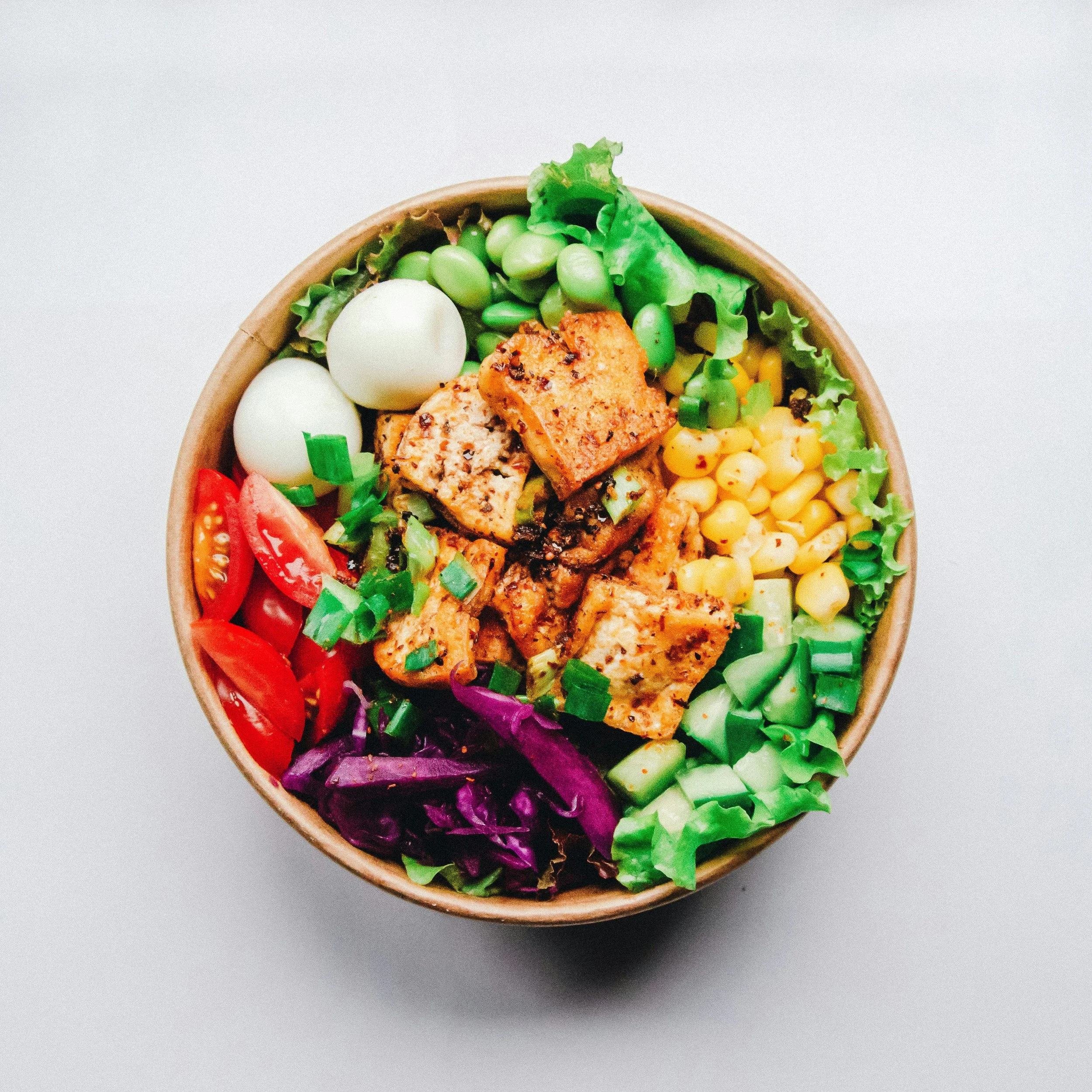
A satisfying meal contains protein, fiber, fat, and some carbohydrates — all four, in roughly the right proportions. Think of your plate visually: half vegetables, one quarter protein, one quarter slow-burning carbohydrate, and a small amount of healthy fat added on top or mixed in.
The Satisfying Plate
+ Healthy fat throughout (olive oil, avocados, nuts)
Here is what this looks like across a full day. Same general meals — just reorganized:
| Meal | Typical Low-Satiety Version | Higher-Satiety Upgrade |
|---|---|---|
| Breakfast |
Large bowl of oatmeal + banana
Protein: ~8g
Fiber: ~4g
Hunger returns: ~60–90 min
|
½ cup oatmeal + 1 cup Greek yogurt + ½ cup berries + handful of walnuts
Protein: ~25g
Fiber: ~7g
Hunger returns: ~3–4 hours
|
| Lunch |
Turkey sandwich on white bread + lettuce only
Protein: ~12g
Fiber: ~1g
Hunger returns: ~60–90 min
|
Whole grain bread + extra turkey + avocado + side of fruit
Protein: ~30g
Fiber: ~7g
Hunger returns: ~3–4 hours
|
| Dinner |
Large bowl of pasta with marinara + steamed veggies
Protein: ~8–10g
Fiber: ~3g
Hunger returns: ~60–90 min
|
1 cup pasta + 4 oz ground turkey in sauce + roasted veggies with olive oil
Protein: ~35–40g
Fiber: ~6–8g
Hunger returns: The next morning
|
Notice that none of these are more food. They are reorganizations of the same meals — with protein, fat, and fiber moved to the front. The oatmeal is still there. The sandwich is still there. The pasta is still there. The difference is composition, and it changes everything about how long each meal holds you.
When Should Frequent Hunger After Eating Be a Reason to Check In With Your Doctor?
If you make these composition changes and still feel persistently hungry shortly after meals, it is worth bringing up with your healthcare provider — especially if this is a new pattern for you.
Certain conditions can increase hunger signals even when you are eating enough, including:
Thyroid irregularities (particularly hypothyroidism or hyperthyroidism)
Blood sugar regulation issues, including insulin resistance or prediabetes
Certain medications that affect appetite
Chronic stress or cortisol dysregulation
You do not need to come in with a diagnosis. You can simply say: "I have been eating balanced meals and still feel hungry within an hour. I want to rule out anything going on hormonally or metabolically." That is a completely reasonable request, and a good provider will take it seriously.
Frequently Asked Questions About Hunger After Eating
|
Is it normal to feel hungry an hour after a big meal? If the meal was large but low in protein, fiber, or fat, then yes, it is very common. The size of the meal matters less than the composition. A huge bowl of refined carbohydrates can leave you hungry faster than a smaller, protein-rich meal. |
|
Does hunger after eating mean my metabolism is fast? Not necessarily. While some people do have naturally higher energy needs, early hunger is more often a signal about what you ate rather than how fast you burn it. Start with meal composition before assuming your metabolism is the cause. |
|
What is the best thing to eat if I am always hungry after lunch? Build your lunch around 30g of protein first. Then add fiber-rich vegetables and a source of healthy fat. Common quick options: a large salad with grilled chicken and olive oil dressing, a grain bowl with salmon and roasted vegetables, or a wrap with turkey, avocado, and plenty of greens. |
|
Should I eat again if I am genuinely hungry, or wait it out? Eat. Ignoring genuine hunger signals tends to lead to overeating later. The goal is not to white-knuckle your way through the afternoon, it is to build meals that hold you long enough that you are not reaching for food again an hour later. If you are constantly hungry, the meal needs to change, not your willpower. |
|
Can stress or poor sleep make me feel hungry more often? Yes, significantly. Both chronic stress and poor sleep elevate cortisol and disrupt the hunger hormones ghrelin and leptin. This can make you feel physically hungry even when your body has enough fuel. Managing sleep and stress is not separate from nutrition, it is part of the same system. See more on this in my post on how to wake up with more energy. |
Feeling Full Is Not Complicated. It Just Requires the Right Pieces.
Hunger an hour after eating is not a character flaw, a sign that you need to eat less, or proof that you have no self-control. It is your body giving you clear, useful feedback about what the meal was missing.
Composition matters more than quantity. Protein, fiber, and fat are not optional additions — they are what make a meal actually work. And eating while present, seated, and not multitasking gives your brain the chance to register fullness in the first place.
Building satisfying meals is a skill, not a talent some people are born with. It gets easier the more you practice it, and the payoff — in energy, focus, and freedom from constant snacking — is real.
Ready to feel satisfied and stop second-guessing your meals?
My PEACE Method is a practical, judgment-free framework I use with all of my nutrition clients to help them build meals that work for their real lives — not just the ideal version of their day.
|
Grab my free guides to get started: → Free High-Protein Breakfast Guide Or explore more on the blog: → High-Protein Breakfast Ideas for Women |
DISCLAIMER: The information contained in this post is not, and should not be construed as, medical advice. It is provided for informational purposes only. Each individual’s situation, nutritional needs, and medical situation are different, and the information contained in this post may not be appropriate for your personal situation. Always check with your own physician or medical professional before implementing any change to your lifestyle, food intake, exercise regimen, or medical treatment.
(C) 2026 Schuster Nutrition, PLLC

Article written by Melissa Schuster, MS, RDN, CDN, IFNCP
Melissa Schuster is a Registered Dietitian and mom of three. She helps busy moms transform their relationship with food through concierge virtual coaching so they can feel fantastic, lose weight for good, and focus on the things that matter most. With her signature PEACE Method which takes a whole-person approach, Melissa has helped hundreds of women find lasting peace in their bodies and around food. An expert in nutrition, Melissa holds a Masters in Clinical Nutrition and Dietetics from New York University and an Integrative and Functional Nutrition Certification.
Connect with Melissa on LinkedIn.
The Newsletter
Want access to exclusive coaching offers, practical nutrition advice, and a healthy dose of mom-to-mom talk delivered straight to you? You’re in the right place!
