
How to Eat Seasonal Winter Produce and Support Weight Loss
Winter has a way of pulling people toward comfort food. I hear it every single year. As soon as the temperature drops, something switches in the brain, and suddenly, salads taste depressing, iced coffee is a hard no, and every part of you wants something warm. A client once told me she felt like her stomach took over her whole personality from December to February. All she craved were soups, stews, chili, roasted veggies, squash, sweet potatoes, and anything cozy. But she also found herself reaching for melty cookies at night, pouring extra hot chocolate for that quick dopamine hit, and leaning on more grains than usual. Add in the fact that the sun sets before many people even pick up their kids, and movement naturally goes down. All of this makes weight loss feel harder and, honestly, discouraging.
If any of that sounds familiar, you are very much not alone. Winter cravings are real. And while it might feel like the season is one long obstacle course of baked goods and darkness, it is also one of the best times to lean into a strategy that supports your energy, metabolism, and goals – eating with the seasons.
Seasonal eating is one of the simplest ways to feel more nourished, more satisfied, and more in control of your choices. And yes, I’m saying this as a dietitian who has walked hundreds of women through the messy, frustrating cycle of trying to lose weight during the winter. Seasonal eating gives you more flavor, more nutrients, more variety, and a lot less stress about what to cook.
So let’s break it down.
What Does It Mean to Eat Seasonally in Winter?
It means choosing foods that naturally grow in your region during the current season. Those foods tend to taste better, carry more nutrients, and often cost less.
That might sound basic, but most people don't eat this way anymore, because of how much food is shipped across the country and around the world.
Seasonal eating also aligns with what your body tends to crave during colder months: hearty textures, grounding flavors, and ingredients that naturally pair well with warming meals.
If you want to get specific about what grows where you live, I love pointing people to the Seasonal Food Guide. You can choose your state and month, and it will show you exactly what is in season. GrowNYC also has a great breakdown of winter farmers market produce.
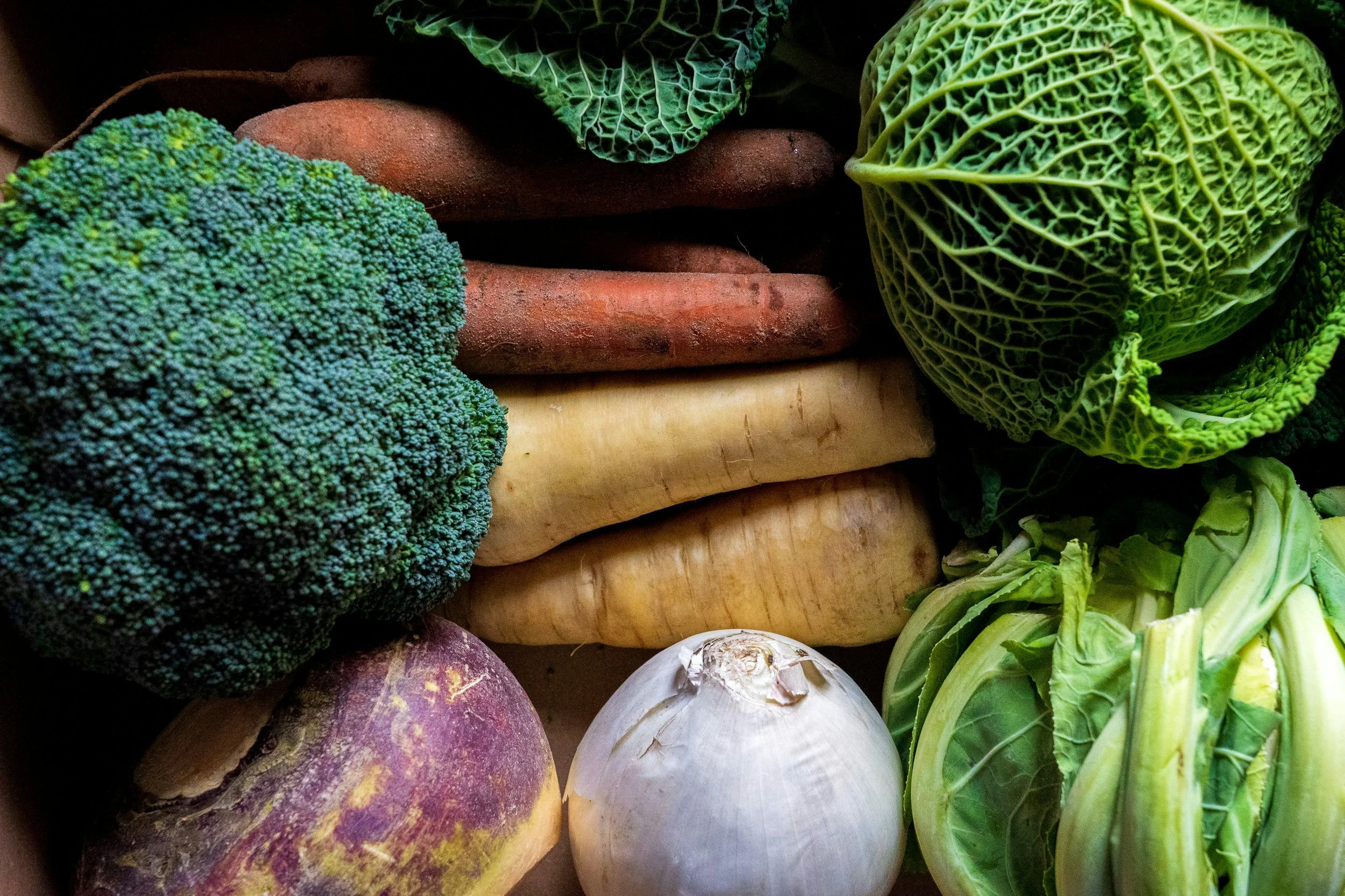
What Produce Is in Season in New York in Winter?
Root vegetables, winter squash, hardy greens, alliums, brassicas, and a handful of fruits. Here is what is typically in season or available locally during the winter months.
| Category | What's in Season |
|---|---|
| Root vegetables | Carrots, parsnips, rutabaga, turnips, beets, celery root |
| Winter squash | Butternut, acorn, kabocha, delicata, spaghetti squash |
| Leafy greens | Kale, collard greens, Swiss chard, cabbage, spinach (depending on the market) |
| Alliums | Onions, garlic, leeks, shallots |
| Brassicas | Brussels sprouts, cauliflower, broccoli |
| Fruits | Apples, pears, cranberries, and citrus (not local to New York, but widely in season nationally) |
| Other seasonal items | Potatoes, sweet potatoes, and winter herbs like rosemary, sage, and thyme |
These foods naturally pair well with warm, comforting meals, so you can satisfy your winter cravings while still supporting weight loss, steady blood sugar, and better digestion.
Want support in adding these foods to your rotation? Sign up for my weekly newsletter, where I share seasonal recipes every Sunday night.

Does Winter Eating Have to Mean Carb Loading?
No. Seasonal eating helps you build cozy meals that feel satisfying without leaving you in a food coma by 3 p.m.
There's this idea that healthy eating basically dies in the winter. People assume it's impossible to eat balanced meals because the only things available are beige and starchy, or that comfort food automatically means higher calories, fewer nutrients, and more cravings.
It doesn't have to be that way.
You can build warm grain bowls with wilted greens and roasted vegetables. Non-starchy veggies like cauliflower, broccoli, carrots, parsnips, and cabbage roast beautifully and feel hearty without being heavy.
Soups and stews can be packed with protein and fiber using ground meats or beans, lentils, carrots, onions, celery, mushrooms, and cauliflower rice. Spaghetti squash is an easy swap that mixes into pasta dishes without losing volume or flavor.
I think about my client Anna, who came to me last winter struggling with exactly this. She told me she felt like she was constantly swinging between wanting to lose weight and wanting to feel warm and comforted. Salads felt like punishment.
But once she started leaning into seasonal produce, everything clicked. Instead of snacking on cookies every night, she made warm bowls with roasted Brussels sprouts, seasoned chickpeas, chicken sausage, or beans. She swapped her cold yogurt bowls for microwaved frozen berries with a scoop of protein mixed in.
She didn't feel deprived, and she didn't feel like she was forcing herself into foods she hated. She actually started losing weight for the first time in months, because she finally felt full and balanced.
How Does Seasonal Produce Support Weight Loss?
Winter produce is naturally high in fiber, low in calories, and incredibly satisfying, which means it fills you up without leaving you feeling restricted.
Vegetables like cabbage, cauliflower, Brussels sprouts, and leafy greens give you bulk and nutrients. Root vegetables also offer slow-burning carbohydrates that support steadier blood sugar.
When your blood sugar is more stable, everything feels easier. A warm bowl with roasted vegetables, protein, and a portion of whole grains helps prevent the big spikes that often lead to cravings later.
I also see digestion improve, because winter veggies are packed with fiber and water, which helps the gut stay regular even during months when people naturally move less.
Seasonal eating also helps with cost and quality. When something is grown in season, it tastes better and is usually more affordable. You end up reaching for more nutrient-dense meals simply because the ingredients are fresher and more appealing.
There is a biology side to this season, too. Research shows that winter can make weight loss feel harder because of shifts in appetite, hormones, and less sunlight (University of Rochester Medical Center). Seasonal changes can also influence metabolism and hunger cues in ways that push people toward higher-calorie foods (Lakeview Cardiology).
At the same time, winter is one of the best seasons to build balanced meals. Hearty vegetables, warming soups, and fiber-rich ingredients help regulate hunger, support blood sugar, and keep your energy more stable (British Heart Foundation).
All of this is why seasonal produce fits so well into winter weight loss. It works with your body rather than against it, helping you feel satisfied and grounded rather than fighting cravings all day.

What Mistakes Do People Make When Eating Seasonally in Winter?
Three come up most often: leaning too hard on packaged convenience food, assuming winter has no variety, and forgetting about flavor entirely.
Relying only on canned or packaged comfort foods. Canned foods themselves are fine. Canned beans, canned tomatoes, and even canned vegetables can be great budget-friendly staples. But when your meals become frozen TV dinners night after night, or ramen on repeat, your energy, digestion, and cravings take a hit.
Assuming there's no variety in winter meals. There are so many types of winter vegetables, and they all cook differently. And yes, you can absolutely use frozen summer veggies in soups and stews.
Variety also comes from changing up your protein sources. Meat, fish, tofu, beans, and lentils all work beautifully with winter produce.
Forgetting about flavor. Herbs, spices, broth, roasting, slow cooking, citrus zest. These tiny things change everything.
Winter meals do not need to be bland or boring. A sprinkle of rosemary on roasted carrots, or a spoonful of pesto on top of a cabbage and chickpea stew, makes a huge difference.
What Are Some Practical Ways to Eat Seasonally in Winter?
Start with a weekly grocery list built around winter produce, then roast two or three vegetables at the beginning of the week. They store well and can be added to bowls and salads, or served alongside any protein.
Warm, nourishing recipes are your best friend. A few of my favorites that clients love:
Lentil and vegetable stew with carrots, celery, onions, and tomatoes — The Mediterranean Dish
Chicken sausage, kale, and white bean soup — Pinch of Yum
Roasted cauliflower and chickpea bowls with tahini — Last Ingredient
Slow-cooked turkey chili with hidden veggies — Schuster Nutrition
Spaghetti squash tossed with ground turkey or tofu and spinach — Well Plated
Download my free Winter Soup Guide + 13 recipes here!
I also share a weekly recipe in my newsletter if you want more inspiration. It makes seasonal eating so much easier when you have something fresh to try each week.
Frozen options are totally welcome, too. Frozen broccoli, cauliflower rice, spinach, and berries are fantastic in winter. They are picked at peak freshness and give you access to foods you might not find fresh.
If you want to take it a step further, winter farmers’ markets can be surprisingly fun. They usually have root veggies, greens, squash, and local apples. A winter CSA can also give you a curated box each week, so you don’t have to think about what’s in season at all.
How Do You Know Seasonal Eating Is Working?
You feel more satisfied at meals, you have steadier afternoon energy, and your digestion improves.
That fullness after meals is your blood sugar stabilizing and your food doing its job. You stop constantly looking for snacks afterward.
You might also notice a little more energy in the afternoon. Winter slumps aren't always about the weather. Sometimes they're about meals that are too carb-heavy or not balanced enough, and seasonal eating helps correct that without you needing to overhaul your entire diet.
Digestion often improves, too. Root veggies and leafy greens are packed with fiber that supports a healthier gut, and when digestion improves, weight loss tends to feel smoother.
One of the biggest shifts I see is a feeling of empowerment. When someone realizes they can enjoy warm, cozy food and still make progress, something clicks.
I had a client last year tell me she felt like she finally stopped dreading winter, because she had a plan that worked with the season instead of fighting it.
FAQs About Seasonal Eating in Winter
Yes. Freezing preserves nutrition, and it counts as seasonal if the produce itself is from a winter crop. Honestly, even if it isn't, it's still fine. The goal isn't to follow strict seasonal eating rules. The goal is to lean into what works well in winter and reduce reliance on produce that travels long distances and loses nutrients along the way.
Try different cooking methods. Roasting, sautéing, slow cooking, or tossing veggies into soups can make them taste completely different. Spices like curry powder, paprika, garlic, lemon zest, or rosemary can turn basic vegetables into something you actually enjoy.
Most people shift naturally every few months. You don't need to overhaul your kitchen four times a year, but rotating in new produce helps you get more nutrients and feel less bored. Your body appreciates variety.
Final Thoughts: Embrace the Season, Nourish Your Body
Winter does not have to mean weight gain or blah meals. There is so much flavor in seasonal produce and so many ways to build cozy, balanced meals that help you feel your best. Eating this way can support fat loss, steady energy, fewer cravings, and more confidence around your choices.
If you try anything from this post, let it be this. Pick one winter vegetable you normally skip and try it this week in a new recipe. You might be surprised by how much you enjoy it.
For more weekly recipes and tips, join my newsletter.
And if you want support building a plan that works with your lifestyle and your goals, you can learn more about 1:1 coaching inside my PEACE Method. I would love to help you feel grounded, nourished, and confident this winter.
References:
DISCLAIMER: The information contained in this post is not, and should not be construed as, medical advice. It is provided for informational purposes only. Each individual’s situation, nutritional needs and medical situation are different, and the information contained in this post may not be appropriate for your personal situation. Always check with your own physician or medical professional before implementing any change to your lifestyle, food intake, exercise regimen or medical treatment.
(C) 2025 Schuster Nutrition, PLLC

Article written by Melissa Schuster, MS, RDN, CDN, IFNCP
Melissa Schuster is a Registered Dietitian and mom of three. She helps busy moms transform their relationship with food through concierge virtual coaching so they can feel fantastic, lose weight for good, and focus on the things that matter most. With her signature PEACE Method which takes a whole-person approach, Melissa has helped hundreds of women find lasting peace in their bodies and around food. An expert in nutrition, Melissa holds a Masters in Clinical Nutrition and Dietetics from New York University and an Integrative and Functional Nutrition Certification.
The Newsletter
Want access to exclusive coaching offers, practical nutrition advice, and a healthy dose of mom-to-mom talk delivered straight to you? You’re in the right place!
