
Back to School Meal Prep for Moms Who Are Already Stretched Thin
Quick Summary: Back to school meal prep does not have to be a Sunday production. A focused 60–90 minute prep session — covering proteins, grains, chopped vegetables, and a few lunchbox staples — can buy back significant time across the whole week. The highest-leverage moves: batch cook one or two proteins, prep a grain, wash and chop vegetables, and build a repeatable lunchbox formula your kids will actually eat.
This post covers exactly what to prep, how long it takes, and how to make sure you are eating too — not just everyone else.
It is 7:30am on the first day of school. You are scrambling to get the sign ready for the photo, your oldest is melting down about the wrong shoes, your middle is refusing to get dressed, and your youngest needs to be held or the whole house hears about it. And… Lunch still needs to be packed. (Oh wait — this is me.)
Whether your kids are teenagers sleeping through their alarms, early elementary like mine, or somewhere in between — those first days of school are a lot. And the meals do not stop just because the chaos does not either.
I know this season intimately. As a Registered Dietitian Nutritionist and a mom of three — a first grader, a three-year-old, and a six-month-old who just started solids — back to school is not something I observe from a distance. Meal prep is not optional in our house. It is the thing that keeps everything from falling apart at 5:30pm.
But here’s the thing: meal prep does not have to mean a four-hour Sunday session with color-coded containers. For moms who are already stretched thin, a small set of smart moves done once or twice a week can completely change how the school week feels — for you and for your kids.
This post covers exactly what to prep, how much is realistic, and — critically — how to make sure your own food is actually part of the plan.
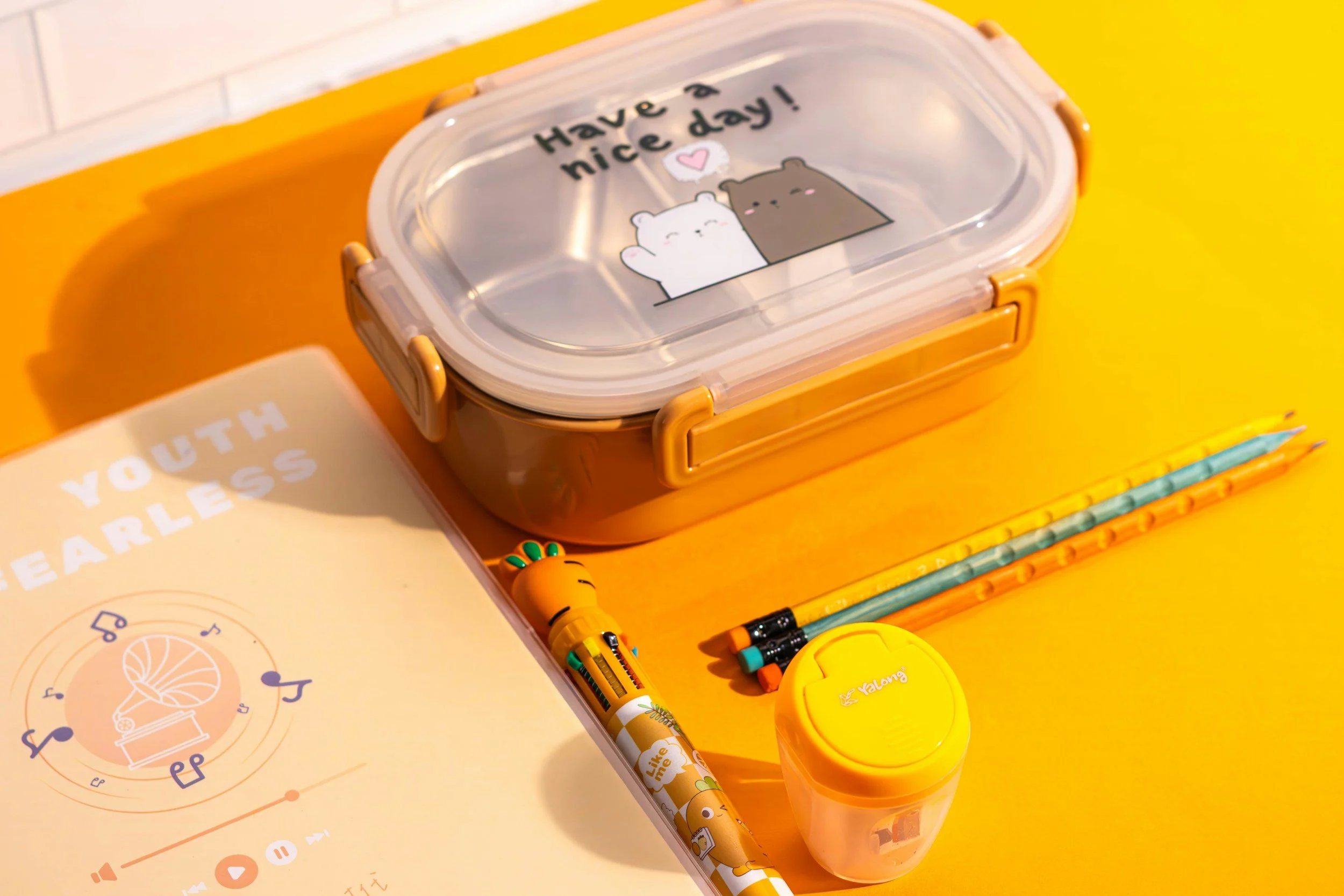
Why Is Back to School the Best Time to Reset Your Meal Prep Routine?
September is the real fresh start of the year — and new routines are far easier to build at natural transition points than at any random Tuesday in February.
For a lot of families, summer quietly dissolves any eating structure that existed in the spring. Meals happen at irregular times. Snacks blur into lunch. Everyone eats when they feel like it. That is fine for summer — but it does not work when the alarm goes off at 6:30am and there is a bus to catch.
When the school year kicks in, everything shifts at once: earlier wake-ups, packed schedules, homework in the afternoon, evening activities layered on top of work. If you are a working mom, the after-school window between 3pm and 7pm can feel genuinely impossible — pick up kids, manage homework, field meltdowns, and somehow get a nourishing dinner on the table.
Getting organized in September is one of the highest-leverage things you can do for your family's nutrition for the rest of the year. The habits you build now tend to stick through October, November, and beyond. The time to do it is at the start, not when you are already three months in and running on empty.
What Does Back to School Meal Prep Actually Need to Include?
The highest-leverage meals to prep are lunches, dinners, and — most often overlooked — mom's own food. You do not need to prep every single meal. The goal is to prep the components that cause the most friction during the week.
Here is how I think about it in three categories:
• Lunches: If you are packing for kids, you are probably packing for yourself too — or you should be. Prepping lunchbox components in bulk (washed fruit, portioned hummus, sliced cheese, cooked grains) means lunch takes two minutes instead of fifteen.
• Dinners: You do not need full meals prepped. You need prepped ingredients — a cooked protein, a grain, chopped vegetables — that collapse the 5:30pm decision fatigue into something manageable.
• Breakfast: This is the meal most moms skip for themselves and rush through for their kids. Prepping a few grab-and-go breakfast options means you actually eat before the chaos begins.
The pattern I see most often with clients: they prep everything for their kids and completely forget their own food. Tess came to me as a busy, overwhelmed mom of two young kids who was frustrated trying to feed her family healthy food in a rush. She was planning thoughtfully for her children and grabbing whatever she could find for herself — which usually meant crackers at noon or a granolal bar on the way out the door. Getting her own food into the prep plan was the first and most important shift we made together.
One more thing worth naming: most moms overcomplicate this. My clients who are most consistent with meal prep tend to use a 1–2 week rotation and stick with it for a few months before switching it up. Simple and repeatable beats elaborate and unsustainable every single time. Grab my free High-Protein Breakfast Guide for ideas on making breakfast part of the prep plan, or see my post on breakfast ideas that travel well.
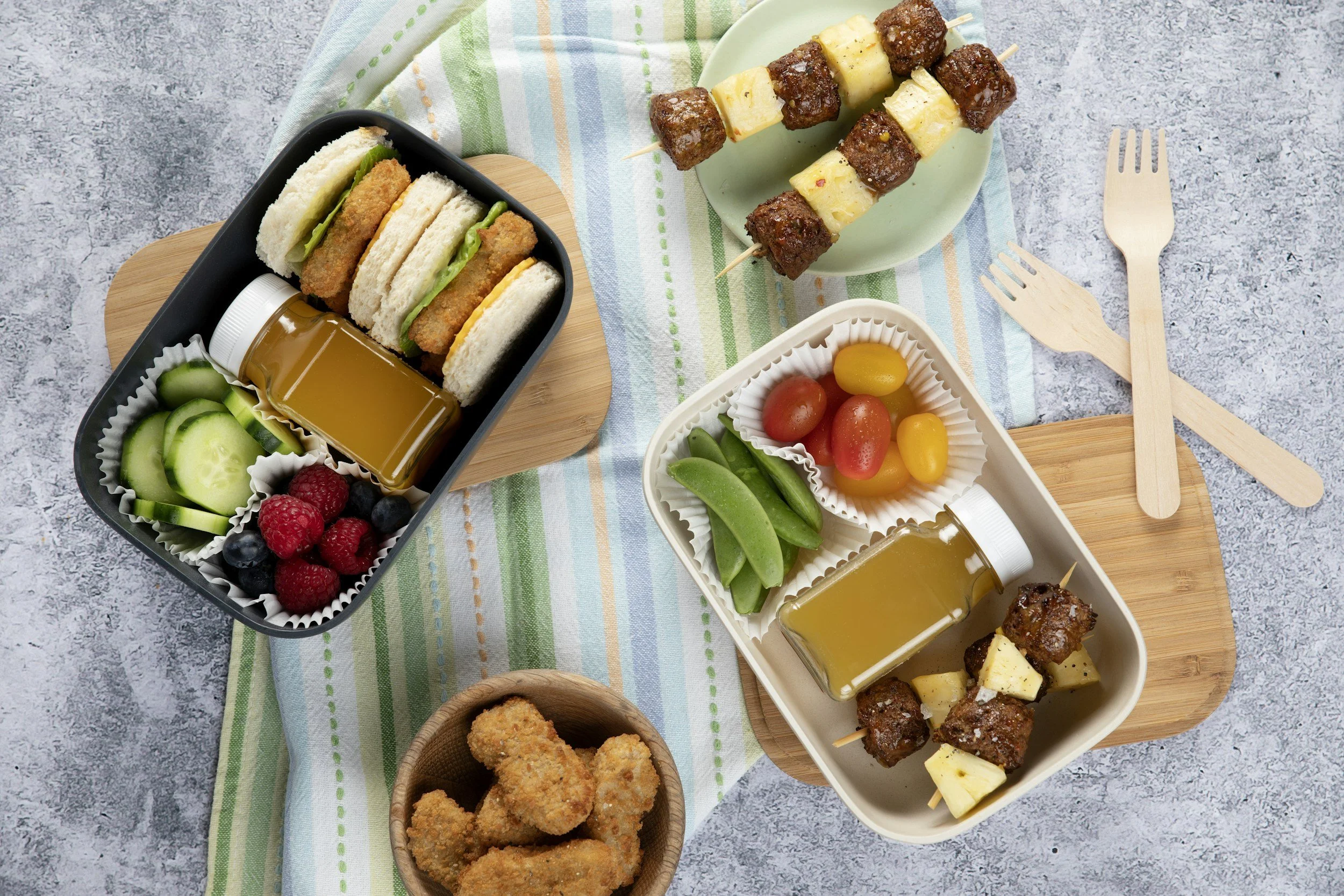
What Can You Realistically Prep in Under Two Hours?
In under two hours, you can prep a protein, a grain, chopped vegetables, a sauce or dressing, and a few lunchbox staples — and those five things will cover the majority of your weeknight meals and lunches.
The key is choosing ingredients that pull double duty. A batch of roasted chicken thighs becomes a lunch salad on Monday, a grain bowl on Tuesday, and a taco filling on Wednesday. A pot of quinoa goes into lunch boxes as a side, into a dinner bowl with vegetables, and into a quick breakfast with fruit and nuts.
Here is a realistic back-to-school prep session in table form:
| What to Prep | Time It Takes | Meals It Covers |
|---|---|---|
| Batch protein (chicken thighs, ground turkey, hard-boiled eggs) | 25–30 min | Grain bowls, salads, tacos, lunchboxes, quick dinners |
| Cook a grain (quinoa, brown rice, farro, pasta) | 20–25 min (mostly hands-off) | Lunch sides, dinner bowls, breakfast with fruit and nuts |
| Wash and chop vegetables | 15–20 min | Salads, stir-fry, roasted veggie sides, snack packs |
| Roast a sheet pan of vegetables | 25 min | Dinner sides, grain bowls, egg scrambles |
| Make a sauce or dressing | 5–10 min | Salads, grain bowls, dipping sauce for lunchboxes |
| Portion snacks (fruit, cheese, hummus, nuts) | 10 min | Kids' snack packs, mom's desk snacks, after-school plates |
| Prep lunchbox components (sliced fruit, washed grapes, portioned crackers) | 10–15 min | School lunches all week |
| Cook a pot of soup or grain-based dish | 30–40 min (mostly hands-off) | Dinners, mom's lunch, easy reheat meals |
In our house, the biggest time-saver is a rotisserie chicken picked up on Sunday. It becomes dinner Sunday night, lunch bowls Monday and Tuesday, and a soup or stir-fry later in the week. If you want a complete meal prep plan and prep guide to take the guesswork out entirely, my Mood Boost Reset includes everything laid out for you.
What Should Back to School Lunches for Kids Actually Include?
Kids who do not eat their lunch come home ravenous, dysregulated, and impossible to manage — which makes the after-school hour even harder. Repeatable lunchbox formulas outperform creative daily planning every single time.
The formula I give every client with school-age kids:
- Protein: chicken strips, deli turkey, meatballs, hard-boiled egg, cheese cubes, edamame, hummus
- Carbohydrate: whole grain crackers, pita, pasta, rice, whole grain bread
- Fruit and/or vegetable: whatever they will actually eat (start there, build from there)
- Something fun: a small treat, a note, a dip — something that makes the box feel good to open
Keep the formula the same every week. Rotate what fills each slot. This is how kids build comfort with food without parents having to reinvent the wheel daily.
For very picky eaters, I often recommend keeping a true weekly rotation, which also helps with decision fatigue. In our house it looks like this:
| Day | What's in the Box |
|---|---|
| Monday | Sunbutter + jelly sandwich | cheese stick | fruit | cucumber slices | chocolate chips |
| Tuesday | Turkey and cheese sandwich or wrap | fruit | baby carrots | hummus |
| Wednesday | Pasta with meatballs | fruit | roasted broccoli or veggies | mini cookie |
| Thursday | Yogurt | fruit | granola | sunbutter chocolate cup |
| Friday | Hard-boiled egg | cheese | fruit | crackers | pepper slices | gummies |
Kids know what to expect, which actually makes them more likely to eat it. Small tweaks are how you add variety without reinventing the wheel: cut the sandwich into a fun shape with an Uncrustables cutter, swap in a toothpick as a utensil (kids genuinely love this), or change how the fruit or vegetable is cut or lightly seasoned. That is often all it takes.
For my kids, fruit is the safe food — my kids will eat it no matter what else is in the box. Starting with one guaranteed safe food per lunch means even a picky day has something that gets eaten, and the pressure around the rest of the box drops considerably.
Prep-friendly lunchbox staples that hold up well in the fridge:
Hard-boiled eggs (last 5 days peeled, 1 week unpeeled)
Sliced cheese or cheese sticks
Washed and dried grapes, berries, or sliced apples (store with a paper towel to absorb moisture)
Hummus portioned into small containers
Cooked pasta or grains portioned into containers
Deli turkey or chicken strips
How Do You Make Sure You Are Actually Eating Too?
The mom who preps food for everyone else and then stands at the counter eating crackers at noon is one of the most common patterns I see in my practice — and it is one of the most important ones to interrupt.
When you graze instead of eat, your blood sugar swings throughout the day, your energy crashes in the afternoon, and by 4pm you are reaching for whatever is fastest. This is the direct path to stress eating — which I cover in depth in my post on how to stop stress eating as a mom.
This is exactly the kind of shift we work on together in the PEACE Method — my framework for building sustainable nutrition habits that fit into a real mom's life, without overhauling everything at once.
Three strategies for building your own lunch into the back-to-school prep plan:
Prep your lunch at the same time as the kids' lunches. If you are building lunchboxes Sunday or Monday morning, build yours too. Put it in a container in the fridge. Treat it as non-negotiable.
Use the same components. You do not need a separate meal. The same roasted chicken, grain, and vegetables that go into the kids' lunches can be plated differently for yours. Add a bigger salad or a dressing you like.
Make lunch visible. If your lunch is prepped and ready in the fridge, you will eat it. If it requires assembly when you are already distracted, you will skip it. The friction has to be removed in advance.
Tess told me that before we worked together, she had genuinely not eaten a real lunch in months. She was so focused on getting everything ready for her kids that her own food was an afterthought. Once she started building her own lunch into the Sunday prep routine, she described the difference in her afternoon energy as immediate — and the late-day grazing and mood crashes dropped significantly within the first two weeks.
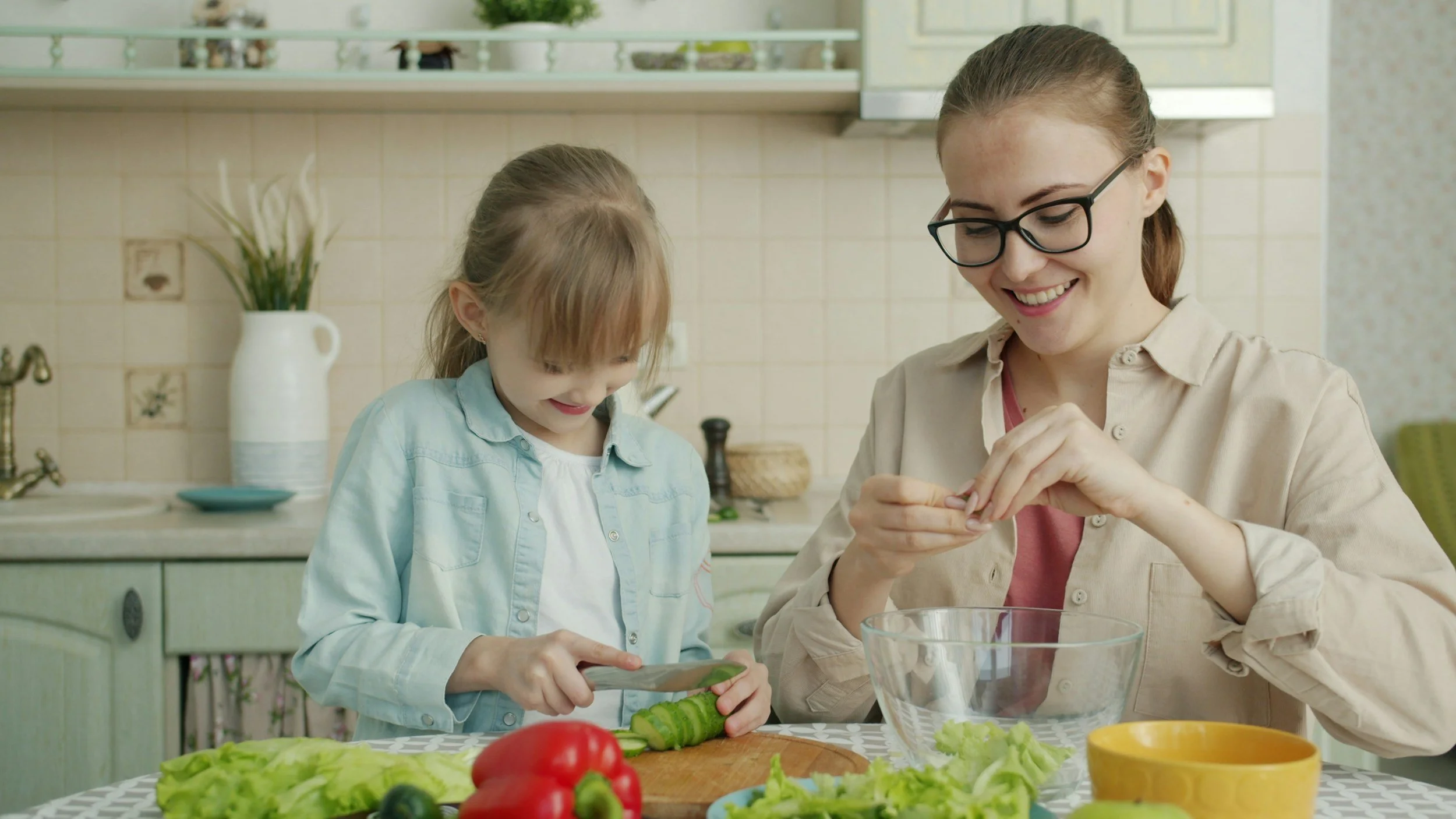
How Do You Get Dinner on the Table During the After-School Sprint?
The after-school to dinnertime window is the hardest part of the day — and prepped ingredients are what make it survivable. You do not need full meals prepped. You need a prepped protein, a prepped grain, and a vegetable option, and dinner takes 10 minutes instead of 45.
My personal go-to dinner formula during the school year: protein + grain or starch + vegetable, assembled rather than cooked from scratch. Here are the frameworks I use most often:
Rotisserie chicken + frozen rice or quinoa + salad kit or air-fried vegetables. This is the weeknight workhorse. On the table in under 15 minutes.
Amylu chicken meatballs or Bilinski's chicken sausage + protein pasta + roasted vegetables. The meatballs and sausage are fully cooked — you are just reheating and assembling.
Turkey burgers + frozen grain + whatever vegetable is prepped. Turkey burgers take 8 minutes in a skillet. Add prepped veggies and a grain and dinner is done.
Sheet pan situation. If you have chopped vegetables and a protein prepped, a sheet pan dinner is 5 minutes of assembly and 25 minutes of hands-off oven time.
The strategy that makes all of these work: batch cook one or two proteins on Sunday and use them across multiple dinners. A batch of ground turkey becomes taco bowls on Monday, stuffed peppers on Wednesday, and a pasta sauce on Thursday. The protein does not change — just what surrounds it.
Here is what a realistic school-week dinner rotation looks like in our house:
| Night | What's for Dinner Each meal below is designed to deliver at least 25–30g of protein per meal across the week — the threshold that makes a meaningful difference in satiety and energy. |
|---|---|
| Monday | Meal-prepped or rotisserie chicken + frozen quinoa or rice + air-fried broccoli (~30–35g protein) |
| Tuesday | Taco Tuesday — ground turkey, chicken, beef, tofu, or shrimp + tortillas + salad kit (~25–30g protein) |
| Wednesday | Pasta night — vary the pasta shape + Amylu chicken meatballs or Bilinski's chicken sausage (~28–32g protein) |
| Thursday | Fish night — salmon, cod, or shrimp on a sheet pan with diced potato or sweet potato + veggies (~30–35g protein) |
| Friday | Turkey burgers with bun + salad or roasted vegetables (~25–30g protein) |
Frequently Asked Questions About Back to School Meal Prep
As a general rule: cooked proteins last 3–4 days, cooked grains last 4–5 days, washed and chopped vegetables last 3–5 days depending on the vegetable, and hard-boiled eggs last up to 1 week unpeeled per USDA FSIS food safety guidance and FDA safe food handling recommendations. Build your prep schedule around two sessions per week if you want everything to feel fresh — Sunday and Wednesday works well for most families.
Yes — especially for picky eaters. Having safe foods consistently available and ready reduces mealtime battles significantly. The key is pairing a safe food alongside whatever you have prepped, rather than making something separate. This way you are not a short order cook, and your kids are still getting exposure to new foods — research shows it can take 8 to 10 or more exposures before a child accepts a new food, so repeated low-pressure exposure at the table is exactly what builds adventurous eaters over time.
Quick safe food options that take almost no prep and pair easily alongside a meal prepped dinner: a sunbutter and jelly sandwich, a hard-boiled egg (already prepped!), or a small bowl of Cheerios with milk. The meal prepped food stays on the plate. The safe food takes the pressure off. Nobody is cooking two separate dinners.
Sunday is a habit, not a requirement. Many of my clients do a smaller prep on Wednesday or Thursday evening — enough to carry them through the end of the week and the weekend. Even 30 minutes of chopping, portioning, and cooking one protein on a weeknight makes a meaningful difference. The goal is not one perfect session; it is consistent, low-effort moves throughout the week.
No. Glass containers with lids, a sheet pan, a large pot, and a sharp knife cover almost everything. If you want to level up, a rice cooker or Instant Pot for hands-off grain cooking and a large air fryer for vegetables save meaningful time. But the basics are enough to start.
Start with one protein and one grain. Cook a batch of chicken or ground turkey and a pot of quinoa or rice. That alone covers most of the week's lunches and dinners with minimal assembly. Once that feels easy, add chopped vegetables. Build one piece at a time.
If you want a complete done-for-you plan with a full prep guide and meal map, my Mood Boost Reset is designed exactly for this.
A Little Prep Goes a Long Way When Life Gets Loud
Meal prep does not need to be perfect to be useful. It does not need to be elaborate, time-consuming, or Pinterest-worthy. It just needs to happen — in whatever form is realistic for your life this week.
Even 30 minutes of thoughtful prep on a Sunday afternoon changes the entire week. One cooked protein, one washed bag of produce, one portioned set of snacks — that is already a different Monday than the one where you are scrambling at 7am with nothing ready.
Start with the smallest version. Build the habit. Let it become the thing that holds the week together.
My Mood Boost Reset includes a complete meal plan, prep guide, and shopping list designed for busy moms who need structure without overwhelm.
Or grab my free guides to get started right now:
→ Free High-Protein Breakfast Guide
→ Free Snack Guide
If you are ready to work through this one-on-one with support tailored to your family's schedule and needs, I would love to connect. Apply for 1:1 coaching through the PEACE Method here.
Related reading:
→ How to Stop Stress Eating as a Mom
→ Healthy Snacks for Moms
→ School Night Dinner Ideas
→ Healthy Meal Prep Ideas for Weight Loss
References:
DISCLAIMER: The information contained in this post is not, and should not be construed as, medical advice. It is provided for informational purposes only. Each individual’s situation, nutritional needs, and medical situation are different, and the information contained in this post may not be appropriate for your personal situation. Always check with your own physician or medical professional before implementing any change to your lifestyle, food intake, exercise regimen, or medical treatment.
(C) 2026 Schuster Nutrition, PLLC

Article written by Melissa Schuster, MS, RDN, CDN, IFNCP
Melissa Schuster is a Registered Dietitian and mom of three. She helps busy moms transform their relationship with food through concierge virtual coaching so they can feel fantastic, lose weight for good, and focus on the things that matter most. With her signature PEACE Method which takes a whole-person approach, Melissa has helped hundreds of women find lasting peace in their bodies and around food. An expert in nutrition, Melissa holds a Masters in Clinical Nutrition and Dietetics from New York University and an Integrative and Functional Nutrition Certification.
Connect with Melissa on LinkedIn.
The Newsletter
Want access to exclusive coaching offers, practical nutrition advice, and a healthy dose of mom-to-mom talk delivered straight to you? You’re in the right place!
