
Back to School Breakfast Ideas That Actually Get Out the Door in Time
Quick Summary: Back to school breakfast doesn't need to be a production. Aim for protein + carb + a little fat (Greek yogurt and fruit, or eggs and toast), keep 3 to 4 fast options on rotation, and lean on 20 minutes of Sunday prep for your busiest mornings. Most of the ideas below take 5 minutes or less. This post covers easy back to school breakfast ideas that your kids will actually eat (and are mom-approved!).
Nobody warns you that the hardest part of back to school isn't the school part. It's the twenty minutes before the bus. Somewhere between one kid who won't get out of bed and another who's been wide awake since dawn but can't find her shoe, breakfast is supposed to happen too.
I'm a registered dietitian and a mom of three, so I've stood on both sides of this exact kitchen island. I know what the research says about breakfast, and I also know what it's like to be the one hunting for a missing shoe at 7:10.
My client Rachel put it perfectly last week: coffee going cold on the counter, a missing water bottle, a permission slip still waiting on a signature, and a 7:20 bus that isn't going to wait for anyone.
If your mornings look something like that, you're not doing anything wrong. Back to school mornings are genuinely chaotic, and putting together a hot, balanced, sit-down breakfast every single day is aspirational at best.
Most mornings, it's just not happening, and that's fine. So here's the reframe: back to school breakfast success isn't about perfection. It's not a Pinterest spread or a flawless plate before 7:30. It's having three or four easy, reliable options on rotation, so breakfast stops being a decision you have to make every single morning.
This post is exactly that: breakfast ideas that are fast, dietitian-approved, and kid-friendly, without turning you into a short-order cook before your first cup of coffee.
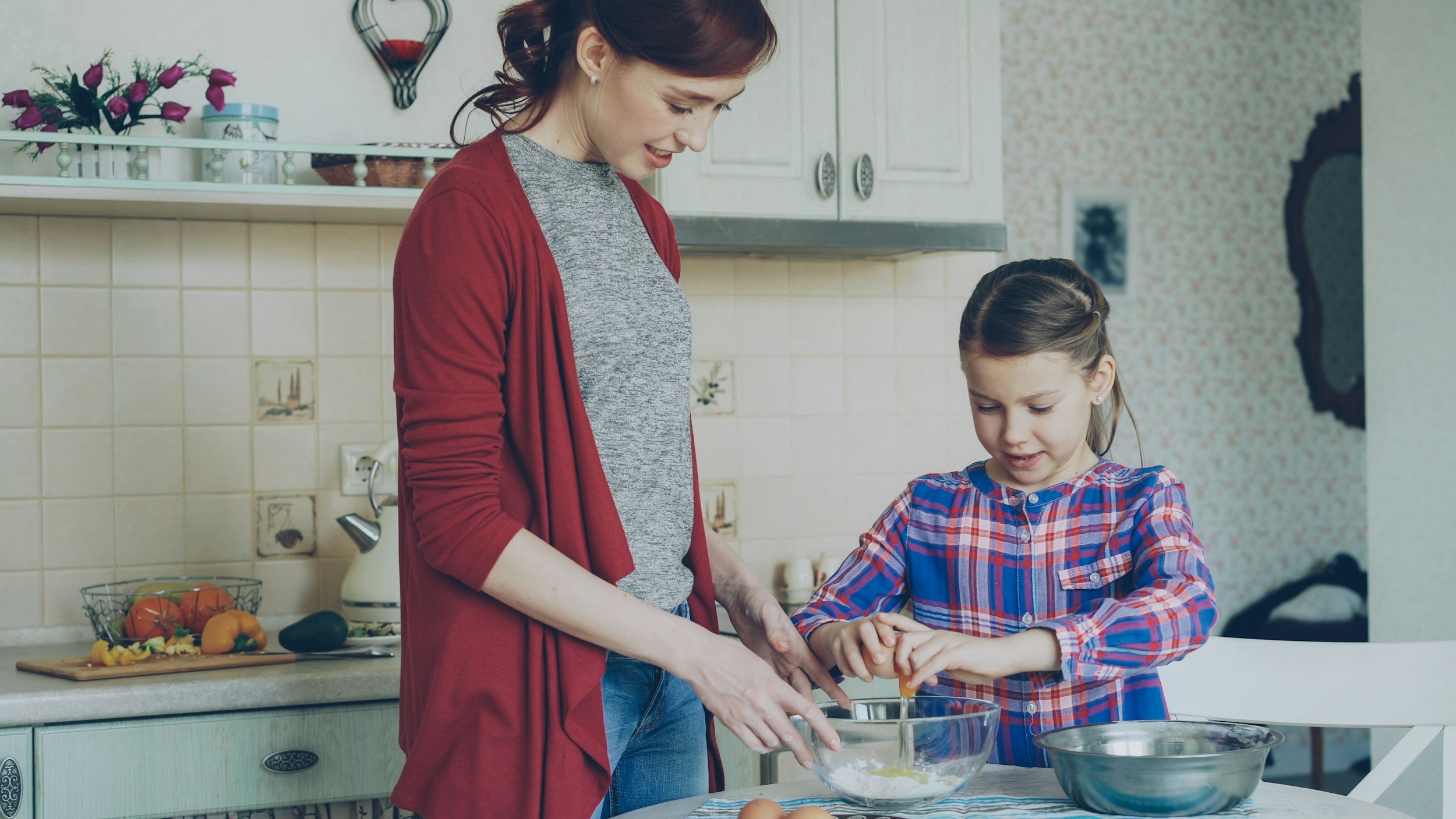
Why Does Breakfast Actually Matter That Much on a School Morning?
Breakfast directly affects how a child's brain and body show up for the first few hours of school. After 10 to 12 hours without food overnight, blood sugar is already running low first thing in the morning, and the brain runs almost entirely on glucose. A child who eats a balanced breakfast has steadier blood sugar, which shows up as better focus, a more even mood, and more energy to actually engage in class instead of just getting through it.
Research backs this up. Kids who eat breakfast before a test score significantly higher in math, reading, and spelling than kids who skip it (American Academy of Pediatrics, 2023). Breakfast eaters also tend to show better memory, concentration, and frustration tolerance throughout the school day (Adolphus et al., 2013).
Skipping breakfast, or relying only on refined carbohydrates like a plain bagel or a bowl of low-fiber cereal, tends to produce the opposite pattern: a quick blood sugar spike followed by a crash right around mid-morning. That's often when a kid who "wasn't hungry" at 7 a.m. is suddenly ravenous, irritable, or unable to focus by 10.
Skipping breakfast, or eating it away from home in a rush, has also been linked to a higher risk of psychosocial difficulties, like lower self-esteem and increased anxiety, in kids (López-Gil et al., 2022).
None of this is meant to add guilt to an already full plate. It's meant to be motivating: even a small, imperfect breakfast beats no breakfast, and a slightly more balanced one beats a carb-only one.
In my own practice, this is one of the most common patterns I see: a kid who insists she's "not hungry" at 7 a.m. is often the same kid who's foggy, cranky, or ravenous by 9:30. That's rarely about appetite. It's blood sugar that already crashed an hour into the school day.
What Does a Good Back to School Breakfast Need to Include?
A good school-morning breakfast doesn't need to be complicated. The formula I give my clients is simple: some protein, some carbohydrate, and ideally a little fat. That combination is what keeps blood sugar steady for hours instead of spiking and crashing before first period.
It also doesn't need to be a sit-down meal. A grab-and-go option can absolutely check all three boxes. A hard-boiled egg and a piece of fruit eaten in the car covers protein, carbohydrate, and a bit of fat just as well as a plated breakfast at the table does.
What I'd steer away from as a stand-alone breakfast is something like a pop tart or a glass of juice on its own. It's not that these foods are "bad," it's that on their own, they're fast-burning carbohydrate with no protein or fiber to slow things down, which sets a kid up for that mid-morning crash.
The single most common gap I see in the families I work with is exactly this: a simple carbohydrate without any protein or fiber to balance it. Think a bagel with butter, or a waffle with syrup. It's not a bad breakfast, it's just an incomplete one, and usually all it needs is one small addition, like a scoop of peanut butter or a side of Greek yogurt, to become a much more stable option.
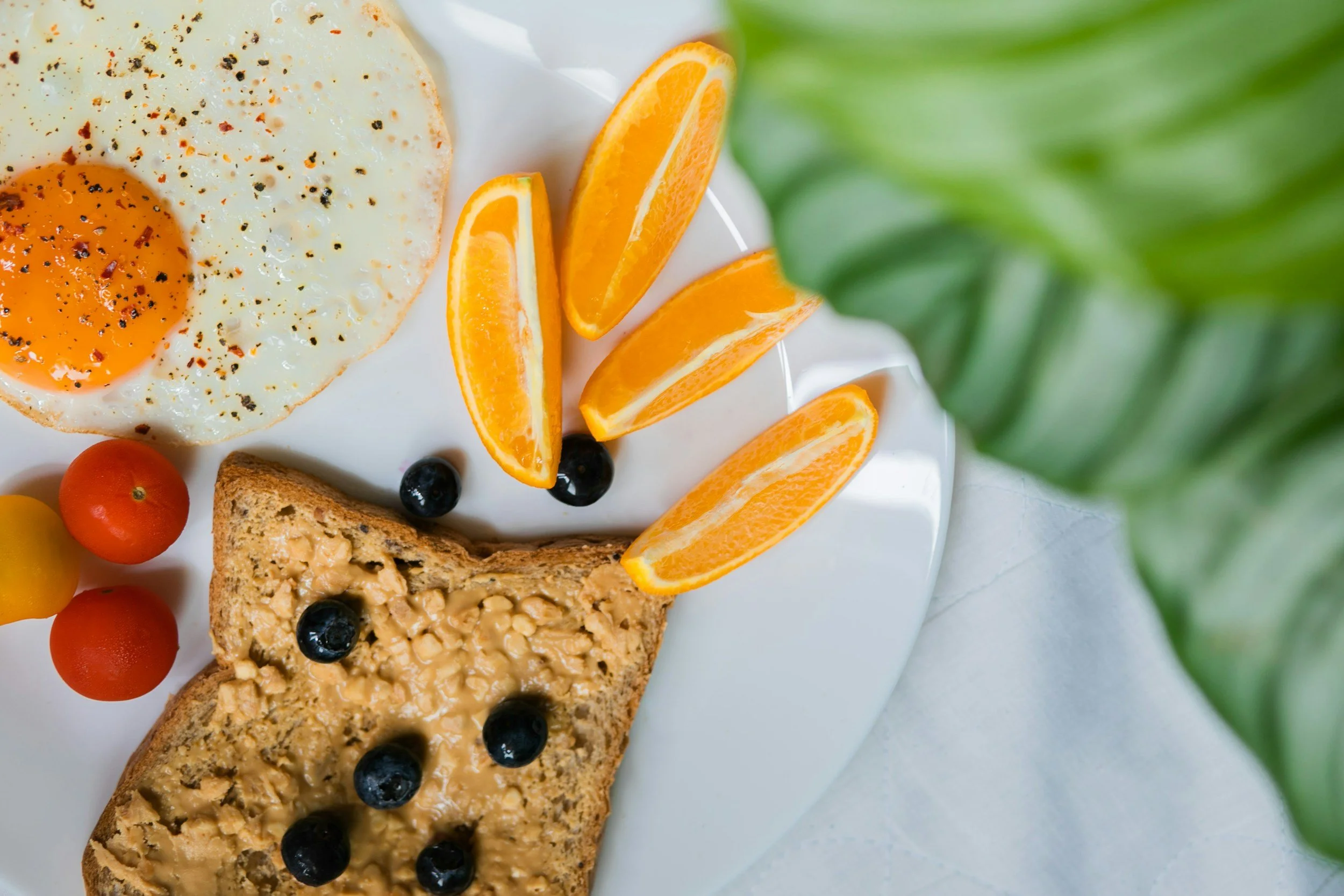
What Are Some Breakfast Ideas That Can Actually Happen in Under 5 Minutes?
These are the options I hand to busy families most often, because every single one covers protein, carbohydrate, and a little fat, and none of them require actual cooking in the morning.
Protein pancakes or waffles (frozen, toasted) with Greek yogurt and berries
Hard-boiled eggs and a piece of fruit
Avocado toast with sliced turkey or a slice of cheese
A smoothie made with Greek yogurt or milk and frozen fruit
Drinkable yogurt and a banana
Peanut butter (or sunbutter) and jelly sandwich on whole wheat bread
Pre-made egg bites and a piece of fruit
Greek yogurt topped with granola and fruit
String cheese, whole grain crackers, and grapes
Overnight oats made with milk, chia seeds, and fruit, ready to grab cold from the fridge
Egg-in-a-hole (a fried egg cooked right into a slice of toast)
That's a mix of warm and cold on purpose. Some mornings call for something toasty, like protein waffles or warmed egg bites; other mornings, cold and ready-to-grab (yogurt, a smoothie, overnight oats) is faster and just as balanced.
Most of these get even faster with a little advance work. Hard-boil a dozen eggs on Sunday so they're ready to grab all week. Portion overnight oats into individual jars Sunday night. Or skip the homemade step entirely and buy pre-made egg bites or protein pancakes at the store to keep in the freezer. There's no rule that says homemade is required for a breakfast to count as a good one.
My own go-to lately is three soft-scrambled eggs with avocado toast and a handful of berries. It takes about five minutes, and between the eggs and the avocado, it's got plenty of protein and fiber to actually hold. For my kids, I just cook the eggs a little longer and keep everything else the same. My biggest picky eater has been all about egg-in-a-hole lately too. Same protein and fiber combo, just tucked into one bite so there's less to negotiate over.
What Can You Prep Ahead for Breakfast?
Some mornings, even 5 minutes feels like a lot. That's where a little Sunday prep changes everything. About 20 minutes of batch cooking can set up 5 mornings of grab-and-go breakfasts.
Egg muffins or mini frittatas (eggs, veggies, and cheese baked in a muffin tin), reheated in the microwave in about 30 seconds
Breakfast burritos (eggs, black beans, and cheese), wrapped individually and frozen, reheated straight from the freezer
Baked oatmeal cups, portioned ahead and eaten cold or warmed
Overnight oats in mason jars, ready to grab for 4 to 5 days
A batch of pancakes or waffles, cooked and frozen, ready to pop in the toaster
None of this requires a full Sunday meal-prep production. Even one or two of these, made once a week, is enough to take the decision-making out of a handful of weekday mornings.
The one I hear about most from clients is overnight oats: oats, chia seeds, almond milk, and berries, stirred together the night before and left in the fridge. That's it. It's quick, it's easy, and it's genuinely grab-and-go on the busiest mornings. If you want a printable version of this section (plus the rest of the rotation), grab my free Busy Mom Breakfast Guide.
What Do You Feed a Kid Who Won't Eat Most Breakfast Foods?
Some kids just won't eat eggs. Or yogurt. Or anything remotely "breakfast-shaped." This is real, and it doesn't mean you're doing something wrong, or that your kid is destined for a lifetime of poor eating habits.
I deal with this in my own house right now. My daughter has decided that pancakes and waffles are just not happening, so instead of fighting that battle every morning, we lean into what she does like. Her go-to is Greek yogurt with peanut butter and a little maple syrup swirled in, with whatever fruit she picks that day. Another favorite in our house is what she calls "purple oatmeal," oats made with frozen blueberries, a spoonful of yogurt, and peanut butter stirred in. On mornings when even that's a no, a bagel with cream cheese is our reliable backup. It's light on protein, so we try to add a little smoked salmon on top when she'll let us, but on the mornings she won't, something is still better than nothing.
A few other kid-friendly options that check the nutritional boxes without asking a picky eater to be adventurous:
A cheese quesadilla on a whole wheat tortilla
A plain protein waffle with peanut butter and sliced banana
A yogurt tube or smoothie pouch with a handful of crackers
Cottage cheese with fruit, for the kids who'll eat it
Cereal with milk, paired with a fruit on the side for fiber
Repeated, low-pressure exposure matters more than any single morning does. A food doesn't have to be accepted the first, fifth, or even tenth time it shows up. The goal is staying consistent without turning it into a negotiation.
One trick that helps more than people expect: presentation. A fun straw, a new plate, or cutting a sandwich into shapes can make a food suddenly "acceptable" to a kid who wasn't interested the day before. We're big fans of an Uncrustables-style sandwich cutter in our house for exactly this reason. Same peanut butter and jelly, suddenly a hit because it looks different.
A Quick-Reference Breakfast Rotation Table
Save this table, or print it and stick it on the fridge. Having a rotation like this on hand means you're never standing in the kitchen at 6:58 a.m. trying to think of something from scratch. You're just picking from a list that already works.
It's organized by prep time on purpose, so you can match the option to how the morning is actually going: under 2 minutes for the roughest mornings, about 5 minutes when there's a little more room, and make-ahead for the days you set yourself up in advance. Rotating through even 6 to 8 options also keeps breakfast from feeling boring, for kids and for you.
| Breakfast Idea | Prep Time | Kid-Friendly | Mom-Friendly |
|---|---|---|---|
| Hard-boiled eggs + fruit | Under 2 min (prepped Sunday) | Yes | Yes |
| Greek yogurt + granola + fruit | Under 2 min | Yes | Yes |
| PB&J on whole wheat | Under 2 min | Yes | Yes |
| Drinkable yogurt + banana | Under 2 min | Yes | Yes |
| Avocado toast + turkey or cheese | 5 min | Most kids | Yes |
| Smoothie (yogurt + fruit + milk) | 5 min | Yes | Yes |
| Protein pancakes/waffles + yogurt | 5 min | Yes | Yes |
| Egg muffins (make-ahead) | Make-ahead, reheats in 30 sec | Yes | Yes |
| Breakfast burrito (make-ahead) | Make-ahead, reheats in 1 min | Yes | Yes |
| Overnight oats (make-ahead) | Make-ahead, grab and go | Yes | Yes |
Frequently Asked Questions About Back to School Breakfast
What if my child refuses to eat breakfast before school?
Don't turn it into a battle at 6:45 a.m., since that rarely helps and can make food feel like a source of stress. Offer something simple and low-pressure, keep a couple of easy options visible and accessible, and if she truly won't eat before leaving, pack something portable for the car or bus. Some kids also do better eating a small amount right when they wake up, rather than 20 minutes later once they're already rushed.
Is it okay for kids to eat breakfast at school instead of at home?
Yes. School breakfast programs are associated with better attendance, behavior, and even higher math scores compared with skipping breakfast altogether (American Academy of Pediatrics, 2023). If mornings at home are too rushed, a school breakfast is a completely legitimate option, not a fallback to feel guilty about.
How do I make breakfast faster without sacrificing nutrition?
Prep ahead. Hard-boil eggs, make a batch of overnight oats, or freeze homemade egg muffins on Sunday, so the "cooking" is already done by the time a school morning happens. A fast breakfast and a nutritious one aren't mutually exclusive, they just require moving the effort to the weekend instead of 7 a.m.
What counts as a protein for breakfast if my kid won't eat eggs?
Plenty of things. Greek yogurt, cottage cheese, milk, cheese, peanut or sunflower seed butter, deli turkey, and even a scoop of protein powder blended into a smoothie all count. Eggs are one option among many, not the only way to get protein into breakfast.
Can moms eat the same breakfast as their kids?
In most cases, yes. A lot of these ideas work well for adults too, especially the protein-plus-carb combinations, like Greek yogurt with fruit or eggs with toast. Depending on your own goals and appetite, you may want a slightly larger portion or an extra source of protein, but there's no need to make two separate breakfasts most mornings. My Busy Mom Breakfast Guide has 10 easy breakfast options - great for moms AND kids.
The Best Back to School Breakfast Is the One That Actually Happens
Here's your permission slip: done is better than perfect, especially at 7 a.m. You don't need a different breakfast every single day, and you definitely don't need a hot, sit-down meal for it to count as "doing it right." Three or four solid options on rotation is genuinely enough.
If you want a printable list of breakfast options, grab my free Busy Mom Breakfast Guide, or if mornings feel chaotic in a way that goes beyond breakfast, reach out to talk about what personalized support could look like for your family.
References:
DISCLAIMER: The information contained in this post is not, and should not be construed as, medical advice. It is provided for informational purposes only. Each individual’s situation, nutritional needs, and medical situation are different, and the information contained in this post may not be appropriate for your personal situation. Always check with your own physician or medical professional before implementing any change to your lifestyle, food intake, exercise regimen, or medical treatment.
(C) 2026 Schuster Nutrition, PLLC

Article written by Melissa Schuster, MS, RDN, CDN, IFNCP
Melissa Schuster is a Registered Dietitian and mom of three. She helps busy moms transform their relationship with food through concierge virtual coaching so they can feel fantastic, lose weight for good, and focus on the things that matter most. With her signature PEACE Method which takes a whole-person approach, Melissa has helped hundreds of women find lasting peace in their bodies and around food. An expert in nutrition, Melissa holds a Masters in Clinical Nutrition and Dietetics from New York University and an Integrative and Functional Nutrition Certification.
Connect with Melissa on LinkedIn.
The Newsletter
Want access to exclusive coaching offers, practical nutrition advice, and a healthy dose of mom-to-mom talk delivered straight to you? You’re in the right place!
