
Quick Summary: Eating healthy during the holidays doesn't mean skipping the stuffing or living on salad. It means keeping a few anchors in place: a normal breakfast and lunch on the holiday itself, protein at every meal, water, and never walking into a party starving. Then you pick the foods you love and enjoy them on purpose. Want 10 breakfasts that make the anchor easy? Grab my free Breakfast Guide.
There was a time when Thanksgiving morning meant a 6-mile run, a few slices of deli turkey, and nothing else until dinner. I was "saving up."
By the time the cheese and crackers came out, I was starving. A few too many glasses of wine, turkey and stuffing, back for more stuffing, and then I leaned hard into dessert... because I was still hungry. Not enough protein, not enough fiber.
Most of us swing between two extremes every holiday season: total restriction ("I'll just have a salad") and total abandon ("it's the holidays, I'll deal with it in January"). Neither one is the goal. Eating healthy during the holidays lives in the middle, and it's a lot more doable than you think.
As a registered dietitian and mom of three, I've watched this play out in my own life and with the 200+ women I've worked with in private practice. Here are the strategies (not rules!) I give my clients so they can enjoy the season, eat the foods they love, and walk into January feeling like themselves (and still on track for lasting weight loss).
Why Does Eating Healthy During the Holidays Feel So Hard?
It feels hard because food is everywhere, your routine disappears, and almost every gathering comes with pressure, memories, and big feelings. That's a lot to manage with "willpower" alone.
Office cookies, class parties, travel days, and late nights wrapping presents. When your normal meals and sleep go out the window, you get hungrier and graze more.
Then there's the meaning. Holiday food is your grandma's cookies and the stuffing your mom makes once a year. That's what makes it so hard to eat "neutrally" (and it's also what makes it special). So here's my take: willpower is the wrong tool. You cannot out-discipline a season that runs from Halloween to New Year's.
The stakes are real, though. In a well-known NIH study, adults gained just under a pound on average between Thanksgiving and New Year's... and a year later, it was still there (Yanovski et al., 2000). Year after year, that adds up, and it's so much harder to take weight off than to never gain it in the first place.
Here's what I see every year in my practice. January is one of my busiest months. Women come in after two months of holiday eating with grand New Year's resolutions, feeling like they're failing and like they have no willpower. They're truly at a breaking point.
One client (I'll call her Jamie) used to do Whole30 every January. After we worked together, she told me: "For the first time in 6 years I haven't done Whole 30 in January."
What's Wrong With Trying to 'Be Good' About Food During the Holidays?
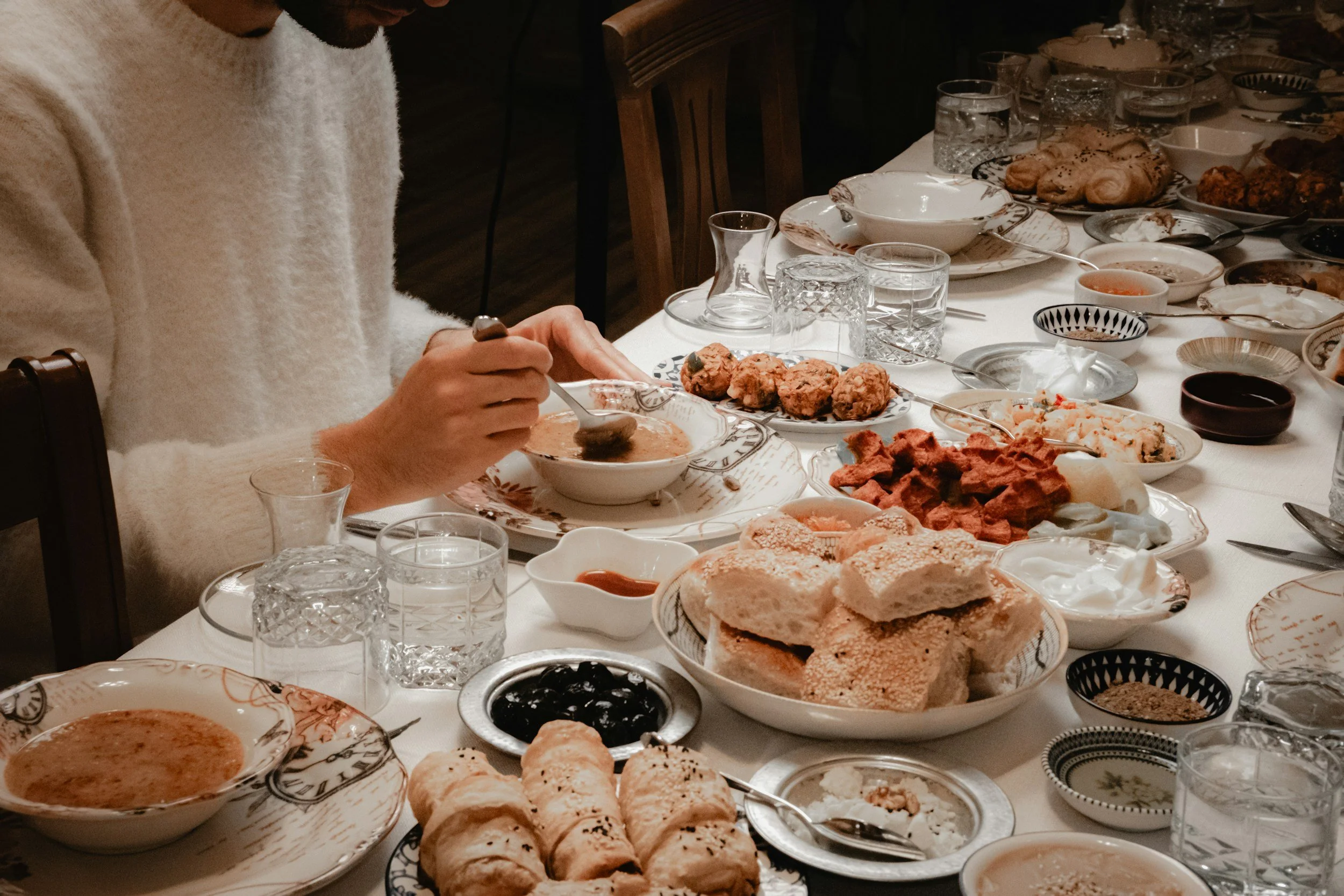
Trying to "be good" sets you up for the opposite. The tighter the grip, the harder the rebound. When a food is off-limits, it's all you can think about.
Researchers who study dieting even have a name for what happens when a strict rule breaks: the "what the hell effect," where the thinking becomes "my diet is already broken, so I might as well eat" (Polivy & Herman, 2020). In real life, that's turkey and green beans at dinner... then pie from the dish at 10pm.
When a client comes in with a holiday plan that's really a list of what she won't eat ("the stuffing always gets me," or "I can't be trusted around my grandma's chocolate chip cookies"), I flip it. We focus on what you CAN eat:
A balanced plate first. Load up on the turkey, chicken, or fish and lots and lots of vegetables.
Then the one thing you're really excited about. Yes, the stuffing. A real portion, enjoyed.
One cookie with fruit and a cup of coffee, instead of "just a bite" of six desserts.
One holiday drink instead of four. Pick the one you're looking forward to, nurse it, and really enjoy it.
You don't have to eat perfectly. You want to eat in a way that feels good at the table and the next morning, with zero shame.
“I can enjoy the stuffing and still feel like myself the next morning.”
What to Focus on for Eating Healthy During the Holidays
Focus on anchors, not restrictions: a few simple habits that stay in place even when everything else about your week is unpredictable.
Regular meal timing. Breakfast, lunch, a snack, and dinner, roughly every 3 to 4 hours.
Protein at every meal. About 30g at most meals keeps you full and cravings quieter.
Water. At least 64 oz a day, plus a glass between drinks at a party.
Never arriving starving. A snack with protein and fiber before you head out the door.
If I could only pick one: eat a normal breakfast and a normal lunch on the day of the holiday. Not a few bites. Not "saving up." A truly NORMAL breakfast and lunch.
That turns the holiday meal into just another dinner. The food looks a little different (hello, sweet potatoes with marshmallows), but your balance stays the same.
When women who usually skipped breakfast ate one with 35g of protein, they felt fuller, showed fewer brain signals tied to cravings before dinner, and snacked less on high-fat, high-sugar foods that evening (Leidy et al., 2013). For more ideas, try my high-protein breakfast ideas for women.
How to Navigate Holiday Parties and Family Meals Without Overthinking
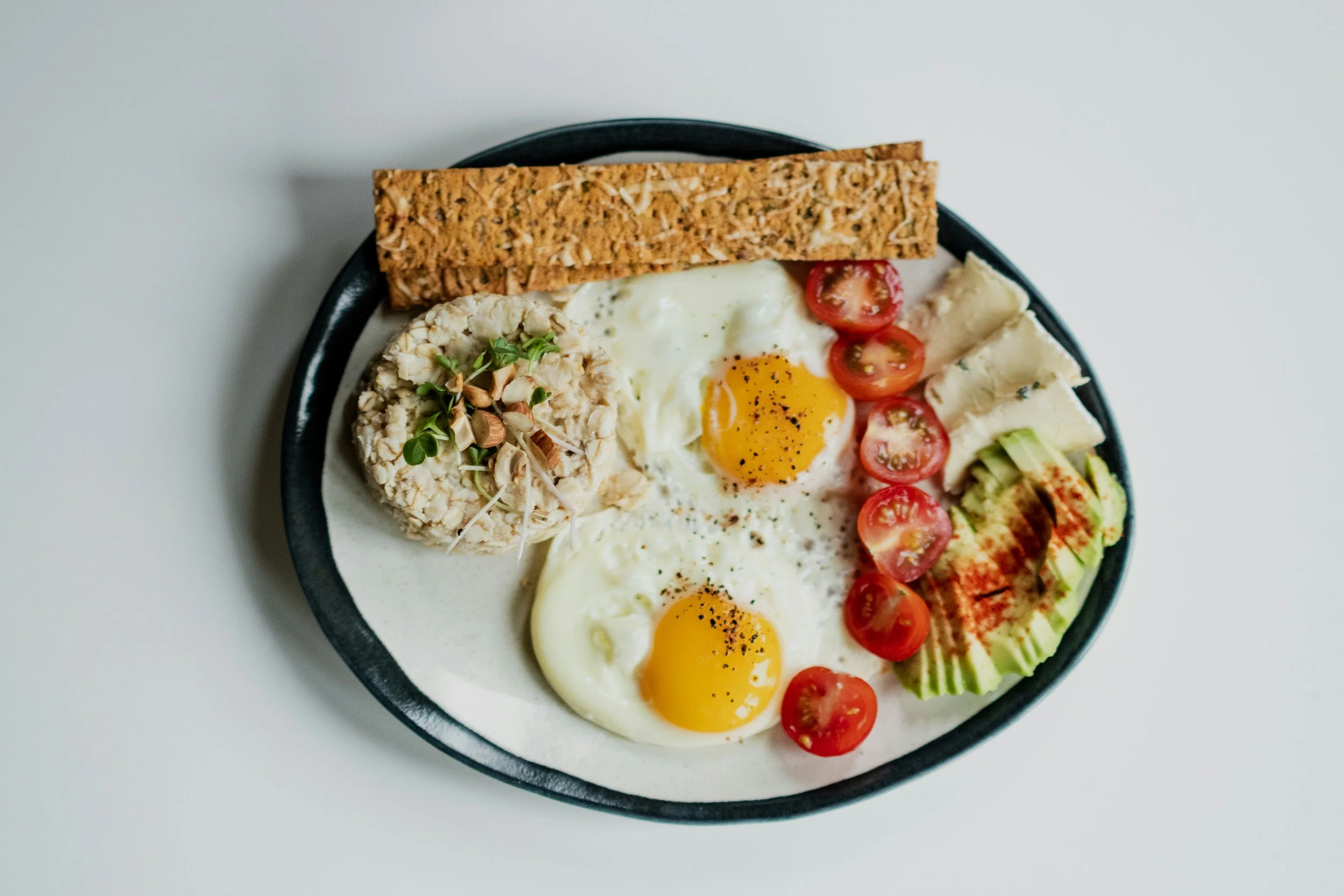
Have a snack before you go, fill your plate once, and sit down to eat it. Those three moves take care of most of the overthinking.
Eat a snack beforehand. Greek yogurt and berries, or an apple and peanut butter, so you're not hovering by the cheese board.
Fill your plate once. Look at everything first, then choose: protein, veggies, and the foods you really want.
Sit down to eat. A review of 24 studies found that distracted eating led people to eat more in the moment, and even more later on (Robinson et al., 2013).
Then enjoy it, instead of anxiously counting bites. One client (I’ll call her Dana) told me what changed for her: “I am able to experience special events without thinking I have derailed my whole journey.”
And then there are the comments. "That's all you're eating?" "You have to try my pie." What I tell my clients: keep your "no" short and warm, because the longer the explanation, the more it sounds negotiable. Practice it out loud before the holiday, and give the person who always pushes a heads-up ahead of time. I share scripts you can borrow in how to say no to food pushers at the holidays.
A Side-by-Side Look at Holiday Eating Approaches
A balanced approach leaves you satisfied and steady, while restriction usually ends in overeating and a January "fresh start." Here's how each plays out across a typical holiday week:
| Restriction-Based Holiday Approach | Balance-Based Holiday Approach |
|---|---|
| A hard workout to “earn” dinner | Your usual movement, or a family walk |
| Skipping breakfast and lunch to “save up” | A normal breakfast and lunch with protein |
| Arriving starving and grazing the cheese board | A snack before you go, then one plate of appetizers |
| “No stuffing this year”... then going back for seconds of everything | Protein and veggies first, plus a real portion of the stuffing |
| Three or four drinks because it's a holiday | One holiday drink you love, with water in between |
| “I already blew it,” so the eating keeps going until January | Back to your anchors the next morning |
In my experience, the balance-based column wins every time. It's the difference between me in my 20s, saving up all day and leaving dinner stuffed, and me now: breakfast, lunch, a plate I'm excited about, and a dessert I actually taste.
How to Recover Quickly If the Holidays Get Away From You
Go back to your anchors at the very next meal. No skipping, no "detox," no starting over Monday. Just breakfast.
Usually the trouble starts the morning after the big dinner. The most common mindset trap I see: "I already messed it up on Thursday, I may as well keep eating." Then it spirals (and fast). One meal turns into a weekend, and a weekend turns into five weeks.
The simple reset I give clients:
Eat breakfast the next morning, with protein and fiber.
Drink your water.
Move in a way that feels good. A 10-minute walk is better than zero.
Plan your next meal so you're not deciding when you're tired and hungry.
Recovery is just going back to your anchors (no restriction required). Be kind to yourself, too. A review of self-compassion studies found it can help with weight loss and eating habits (Rahimi-Ardabili et al., 2018). So give yourself some grace, and go eat breakfast. For a step-by-step plan, read how to reset after Thanksgiving.
This is exactly what we practice in my PEACE Method program: what to eat, and how to handle the "I already blew it" moment so it doesn't become a five-week spiral.
“One big meal is just one meal. My next one is breakfast.”
Frequently Asked Questions About Eating Healthy During the Holidays
Is it possible to actually maintain my weight during the holidays?
Yes, absolutely. Holiday weight gain comes from the whole season, not one dinner, so keeping your anchors in place on the regular days does most of the work. And since adults gain about 1 to 2 pounds over the season on average (Díaz-Zavala et al., 2017), maintaining is a real win. More strategies: how to avoid holiday weight gain.
What do I do if I overeat at a holiday dinner?
Nothing dramatic. Wake up and eat a normal breakfast with protein and fiber. Skipping meals to “make up for it” just sets up the next round of overeating. One big meal won't undo your progress (five weeks of “I already blew it” is a different story).
How do I handle food pushers at family gatherings?
Keep it short and warm: “No thanks, it looks delicious.” You don't owe anyone an explanation - the more you explain, the more it sounds negotiable. Practice your line before the holiday, and give the usual suspects a heads-up. Here are more ways to say no to food pushers.
Is it okay to skip the gym and eat more during the holidays?
Yes, but. On the day of the holiday, if you want to skip the gym and enjoy yourself a little more, that's fine. Do it with intention.
If you have a weight loss goal, though, the holidays can't become permission to skip the gym every day and eat a ton more. There are so many holidays, and if every one is a pass, weight loss gets really hard. Ideally your normal routine (movement and balanced eating) fits right into the season.
How do I help my kids develop a healthy relationship with holiday food?
Role model it. When kids see you enjoy a cookie without guilt, eat breakfast on the holiday, and talk about food neutrally (no “good” or “bad”), they learn that treats are part of life, not something to binge on.
Skip the pressure, too. Research on family feeding links pushing kids to eat with fussier eating and less enjoyment of food (Costa & Oliveira, 2023). Offer the food, let them decide how much, and keep the table fun.
You Can Enjoy the Holidays AND Feel Good in Your Body. These Are Not Opposites.
Healthy holiday eating means eating with more intention and less anxiety (not less food).
The stuffing, the cake, the Christmas cookies... they aren't once-a-year foods.
Bring Tupperware to Thanksgiving (controversial, I know!) and take the stuffing home. Freeze the desserts. Make stuffing in July and have it with chicken and roasted broccoli. When a food isn't on a pedestal, you don't need six cups of it in one sitting.
And January is not a punishment. The goal is to walk into the new year feeling okay, not ashamed.
“I don't have to earn my holiday dinner, and I don't have to make up for it.”
References:
DISCLAIMER: The information contained in this post is not, and should not be construed as, medical advice. It is provided for informational purposes only. Each individual’s situation, nutritional needs, and medical situation are different, and the information contained in this post may not be appropriate for your personal situation. Always check with your own physician or medical professional before implementing any change to your lifestyle, food intake, exercise regimen, or medical treatment.
(C) 2026 Schuster Nutrition, PLLC

Article written by Melissa Schuster, MS, RDN, CDN, IFNCP
Melissa Schuster is a Registered Dietitian and mom of three. She helps busy moms transform their relationship with food through concierge virtual coaching so they can feel fantastic, lose weight for good, and focus on the things that matter most. With her signature PEACE Method, which takes a whole-person approach, Melissa has helped hundreds of women find lasting peace in their bodies and around food. An expert in nutrition, Melissa holds a Master’s in Clinical Nutrition and Dietetics from New York University and an Integrative and Functional Nutrition Certification.
Connect with Melissa on LinkedIn.
The Newsletter
Want access to exclusive coaching offers, practical nutrition advice, and a healthy dose of mom-to-mom talk delivered straight to you? You’re in the right place!
