
Tiny Habits for Moms: Small Changes That Make a Big Impact on Your Health
Every January, I hear the same thing from moms on discovery calls.
“This year is going to be different.”
And I believe them. Every time.
New year energy is powerful. You clean out the pantry, buy the planner, save the workouts, maybe even start strong for a few weeks. And now here we are in March. Two full months in. The routines are back, the schedules are full, and that shiny New Year motivation has quietly faded.
If your New Year’s resolutions already feel shaky or completely abandoned, I want you to hear this clearly. That is not a personal failure. That is not a willpower issue. And it definitely does not mean you are bad at habits or incapable of change.
It means the plan was too big for real life.
March has a way of exposing this. You are no longer riding adrenaline. You are just living your life (and if you’re in the northeast like me, it’s still dark and cold). School schedules, work deadlines, sports practices, sick kids, travel, and the mental load that never really lets up. This is exactly the point where most “start fresh” plans fall apart.
Meaningful change does not come from overhauling everything at once. It comes from small, repeatable actions that fit into the life you are already living. Not the life you imagined in January.
This is where tiny habits come in.
What Are Tiny Habits and Why Do They Work So Well for Moms?
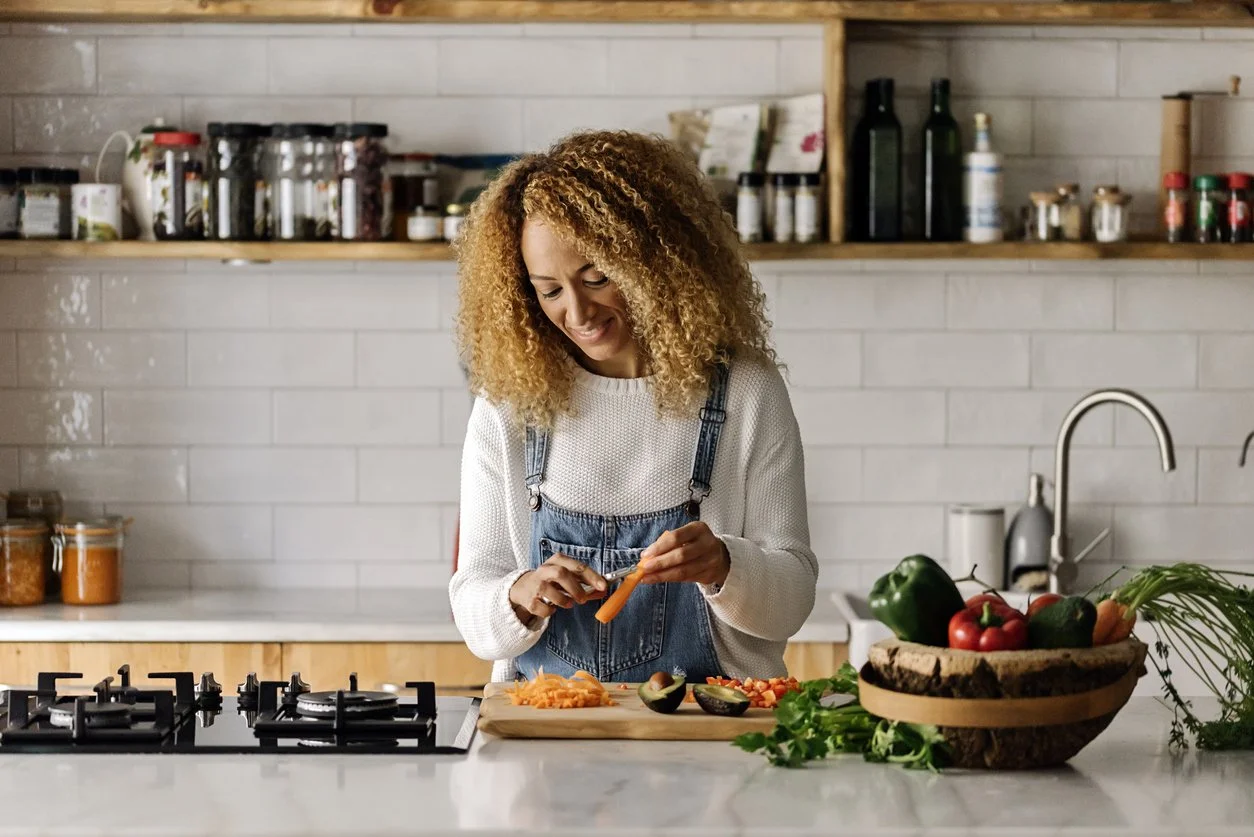
Tiny habits are small, intentional actions that are easy enough to do even on your hardest days, and they work especially well for moms because they attach to routines you already have instead of asking you to carve out extra time.
The idea comes from behavior psychology, most notably BJ Fogg's work, which shows that lasting behavior change doesn't require extreme motivation. It requires making the behavior simple, doable, and connected to something you already do.
For moms, this matters more than almost anything else. Your days are already full of routines: you brush your teeth, make coffee, pack lunches, drive to school, and wash your face at night. Tiny habits work best when they attach themselves to these moments.
I talk about this constantly with clients. You don't need more discipline. You don't need a better planner. You need habits that fit into the structure of your existing life.
A client story: One client had spent years saying she wanted to drink more water and failing every time. There were so many excuses: "I forget my water bottle," "it's too hot or too cold," "I remember at night but then I need to pee."
When we stopped treating hydration like an unachievable goal and instead paired it with brushing her teeth, everything changed. Teeth got brushed every morning no matter what. Water got consumed because it was right there. No extra decision required.
That's habit stacking. And it works because it removes friction instead of adding it.
Why Don't Big Health Changes Stick for Most Moms?
Big health changes don't stick because they're built on all-or-nothing expectations that can't survive real life stress, travel, or disrupted routines. Consistency, not perfection, is what creates lasting change.
Most health goals fall apart not because people stop caring, but because they were built on January-level expectations that don't survive February and March.
These are my clients' stories, and if they resonate with you, keep reading:
A mom decides she's cutting out all carbs on Monday, only to find herself standing in the pantry eating her kids' crackers by Wednesday night.
Another mom successfully completes Whole30 or intermittent fasting for a few weeks, feels amazing, and then hits a stretch of travel, stress, or disrupted sleep. Suddenly the rules feel impossible to maintain, and the swing from control to chaos feels sharp and discouraging.
I've experienced this myself, and it can feel deeply frustrating. You did what you were supposed to do. You followed the plan. And when it stopped working, it felt like something was wrong with you.
Here's the truth: perfection is not the goal. Consistency is.
Nutrition is uniquely challenging because you have to engage with it multiple times a day, every day, forever. There is no finish line. When we expect perfection in something that must be repeated daily, failure is inevitable.
This is exactly why the PEACE Method emphasizes attention to mindset (A) and confidence building (C). These are not abstract ideas, they are the foundation of sustainable change.
When you stop aiming for perfect and start aiming for consistent enough, everything shifts. Food stops feeling like a test you're failing and starts feeling like something you can work with.
What Are the Easiest Two-Minute Nutrition Habits for Busy Moms?
The easiest two-minute nutrition habits are ones that attach to something you already do, so they happen without extra decision-making. Some of the most meaningful nutrition changes I see start with habits that take less than two minutes.
Real client examples of two-minute wins:
Water on the nightstand: One client kept a glass of water on her nightstand. Not as part of a challenge, just there. She drank it when she woke up because it was easy, visible, and stacked with her alarm going off. Over time, she felt more awake in the mornings and less ravenous by mid-morning.
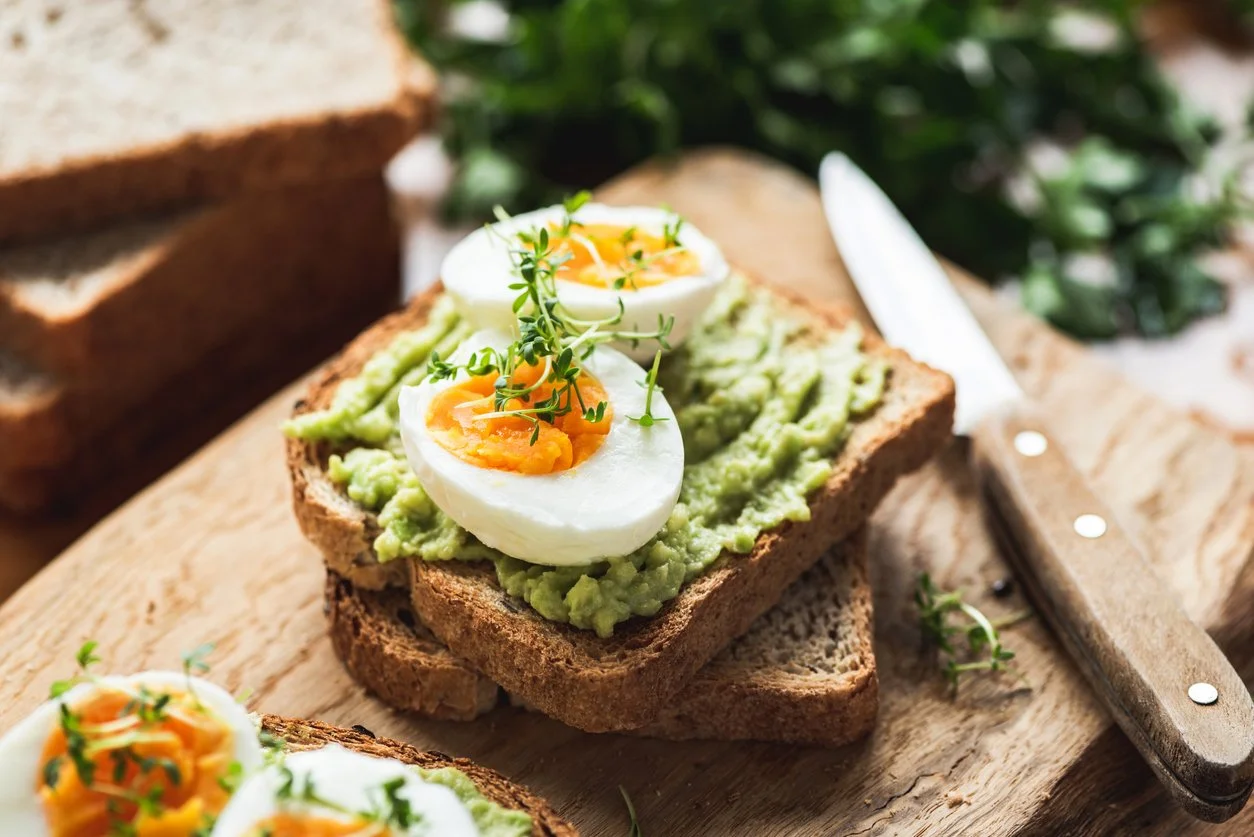
Adding protein to the kids' breakfast: Another client stopped trying to make a separate breakfast for herself. Instead, she added protein to her kids' breakfast and ate it alongside them. Eggs, yogurt, or a simple smoothie became part of an already existing routine. Breakfast stopped being optional because it was already happening, and her kids benefited from the extra fuel (win-win!). Download the free Breakfast Guide for 10 easy mom-approved breakfast ideas.
Fiber supplement during lunch prep: I've worked with moms who took a fiber supplement while packing lunches, not because fiber is trendy, but because that moment already existed.
Veggie prep during coffee: Another client prepped roasted veggies for the week or washed and sliced all her fruit while waiting for coffee to brew, which meant lunch felt easier without ever "meal prepping."
These habits work because they remove the question of when. They simply happen.
Do Micro-Movements Really Count as Exercise?
Yes, micro-movements absolutely count as exercise. Five to ten minutes of movement, repeated a few times a day, delivers real benefits for mood, energy, cravings, digestion, and blood sugar, and it adds up to your daily goal without the pressure of a scheduled workout.
I know we love a good 30-60 minute sweat, but the reality is that if we wait for these longer chunks of time, the workout often doesn't happen. When we accept this season of life and begin to fit in these micro-movements, we notice the effects instantly on our mood, energy, and cravings. So yes, 5-10 minutes counts (and if you do it a few times a day, boom, we've hit 30 minutes!).
Real micro-movement ideas from my clients:
Doing 15 bodyweight squats while brushing your teeth (2x/day = 30 squats a day)
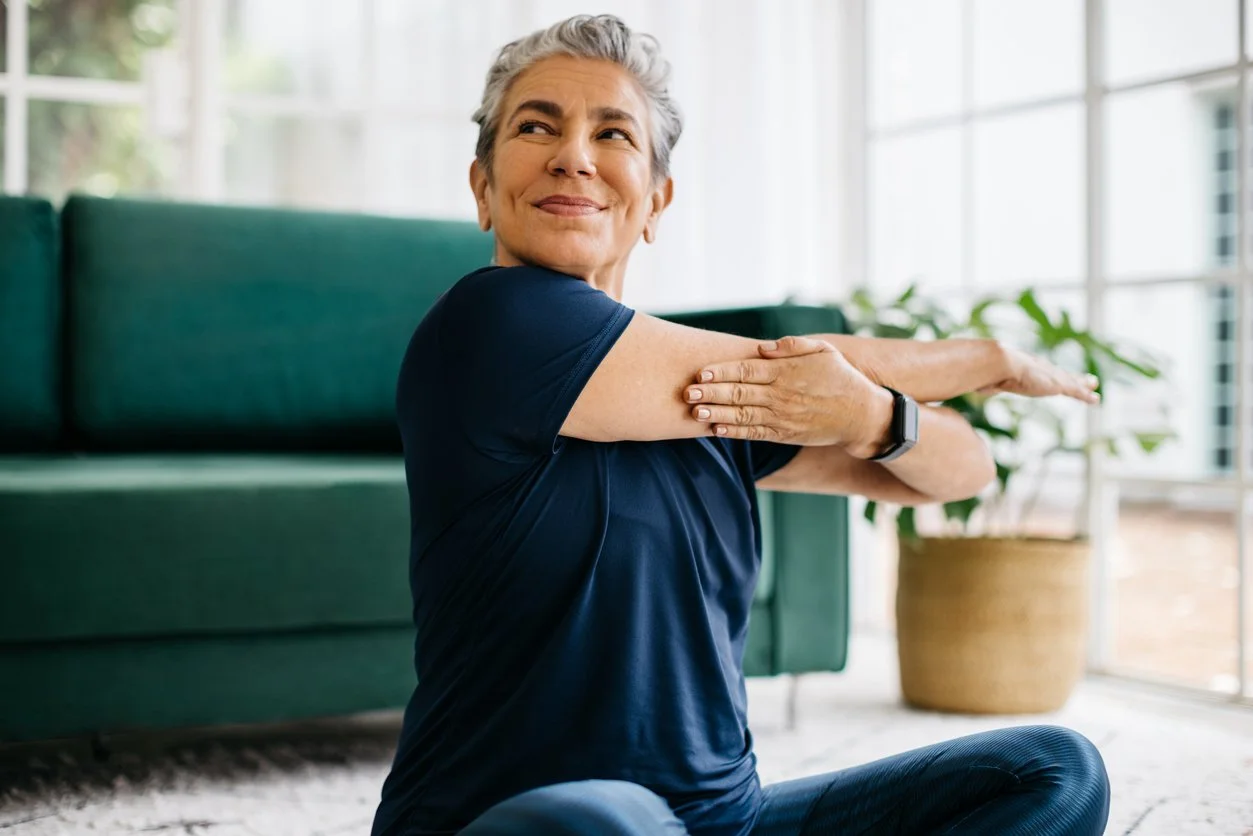
Stretching on the bathroom floor while supervising bath time
Taking a short 5-minute walk after meals for digestion and blood sugar support
What matters most is not intensity; it's repetition. Movement becomes sustainable when it fits into your day instead of disrupting it.
Over time, these small actions reinforce the identity shift of someone who moves her body regularly, even when life is busy. And eventually, when we realize movement can be joyful (and not punishment), we begin to seek it out, with an upward spiral effect.
How Does Habit Stacking Work for Better Nutrition?
Habit stacking works for nutrition because it uses cues that already exist in your day (like coffee, school drop-off, or bath time) to trigger a new healthy habit, removing the mental load of remembering.
Simple habit stacks to try:
Coffee → take vitamins, drink water, or eat breakfast
School drop-off → short walk, favorite podcast, or 5 minutes of deep breathing
Fruit on the counter → visible, easy, more likely to grab as a snack
A note on the fridge → shifts the tone of how you talk to yourself at the end of the day
Celebrating small wins matters more than most people realize. When you acknowledge a habit immediately, even mentally, your brain learns that the behavior is worth repeating. This is how momentum builds quietly, without pressure or burnout.
This is why we celebrate ALL the wins in the PEACE Method program. Every Thursday, I ask my clients to share at least one win for the week. We continue to reinforce what's working well, so that the motivation continues to keep doing it. Interested in learning more?
| Existing Cue (Trigger) | New Habit to Stack |
|---|---|
| Making coffee | Take your vitamins, drink a glass of water, or eat breakfast |
| School drop-off | Take a short walk, listen to a favorite podcast, or do 5 minutes of deep breathing |
| Kitchen counter | Leave fruit visible to grab as an easy snack |
| Fridge door | Post an encouraging note to shift how you talk to yourself at the end of the day |
| Brushing your teeth | Do 15 bodyweight squats or take a few deep breaths |
| Bath time supervision | Stretch on the bathroom floor |
How Do You Track Progress Without Stressing Over It?
You can track progress without stress by looking for weekly trends instead of daily streaks, aiming for 80% consistency, and treating missed days as information rather than failure.
Tracking doesn't have to mean logging every bite or hitting daily streaks. (Honestly, I discourage that level of tracking because I find it leads to obsession and then guilt when we aren't perfect.)
Simple ways clients track progress:
A wall calendar with a check mark on the days they did their habit
A simple habit app on their phone
A weekly check-in with themselves: what felt doable and what didn't?
Practice Better (used in my 1:1 nutrition coaching program so I can offer feedback, support, and lots of heart emojis cheering them on!)
The goal is not perfection. It's awareness.
I encourage clients to look for trends, not streaks. Eighty percent consistency is enough to see meaningful change. Missed days are not failures, they're information.
This is where coaching becomes especially helpful. In the PEACE Method, weekly check-ins replace rigid tracking. We adjust goals, talk through obstacles, and keep expectations realistic. Accountability isn't about being watched, it's about having support when life gets complicated.
FAQs About Tiny Habits for Moms
|
What if I forget a habit for a few days? That is completely normal. Habits are not erased by missed days. Simply restart at the next natural cue without trying to make up for lost time. |
|
How long before I notice real change? Many women notice shifts in energy, consistency, or confidence within a few weeks. Physical changes take longer, but feeling more in control often comes first. |
|
Can I involve my kids in these health habits? Yes. One client, Rayna, stopped trying to keep her habits separate from her kids and instead invited them in: drinking water together in the morning, walking after dinner as a family, choosing vegetables at the store. Her kids became part of the routine rather than the obstacle. |
|
How do I know which habits to prioritize first? Start with the one that feels easiest. Momentum comes from stacking wins, not from choosing the most impressive habit. For many of my clients, that's keeping a cup of water by their toothbrush or prioritizing protein along with their coffee (here's a quick breakfast guide to help!). |
Final Thoughts: Start Smaller Than You Think
You don't need another fresh start. You need a smaller one.
Pick one habit. One. Something that takes two minutes and fits into your existing routine. Let that be enough for now.
If you want a place to start, start with breakfast. Your kids are eating. You can too. Download the breakfast guide and keep it simple.
And if you're tired of trying to do this alone, right now is actually the perfect time for support. The routines are real. The obstacles are clear. This is when habits get built in a way that actually lasts.
I'm taking on new 1:1 clients right now and would love to help you build habits that stick beyond motivation, beyond seasons, and beyond another "I'll start over Monday" moment.
DISCLAIMER: The information contained in this post is not, and should not be construed as, medical advice. It is provided for informational purposes only. Each individual’s situation, nutritional needs, and medical situation are different, and the information contained in this post may not be appropriate for your personal situation. Always check with your own physician or medical professional before implementing any change to your lifestyle, food intake, exercise regimen, or medical treatment.
(C) 2026 Schuster Nutrition, PLLC

Article written by Melissa Schuster, MS, RDN, CDN, IFNCP
Melissa Schuster is a Registered Dietitian and mom of three. She helps busy moms transform their relationship with food through concierge virtual coaching so they can feel fantastic, lose weight for good, and focus on the things that matter most. With her signature PEACE Method which takes a whole-person approach, Melissa has helped hundreds of women find lasting peace in their bodies and around food. An expert in nutrition, Melissa holds a Masters in Clinical Nutrition and Dietetics from New York University and an Integrative and Functional Nutrition Certification.
The Newsletter
Want access to exclusive coaching offers, practical nutrition advice, and a healthy dose of mom-to-mom talk delivered straight to you? You’re in the right place!
