
Magnesium and Perimenopause: How This Essential Mineral Supports Women’s Wellness
Medical Disclaimer: This blog post is for educational purposes only and is not intended to diagnose, treat, cure, or prevent any disease. It should not replace individualized medical advice. Always consult with your healthcare provider before making changes to your supplement routine, especially during perimenopause.
I hear from women every single week who are moving through perimenopause feeling confused, annoyed, overwhelmed, or all three at once. One woman recently told me that she feels like she wakes up in a different body every morning. Her words stuck with me because they mirror what so many women describe. A shift in sleep. A shift in mood. A shift in cravings. A shift in weight that feels sudden even though it has been creeping in quietly for months.
As these symptoms stack up, we tend to search for natural tools that feel supportive rather than extreme. Magnesium has been getting a lot of attention recently, as research shows it may soften some of the discomfort that shows up during perimenopause. Women are asking about it in sessions with me all the time. Can magnesium help me sleep? Can it help with the anxiety that feels like a buzzing under my skin? Can it make my body feel more steady?
If cravings have been one of the loudest symptoms for you, I also have a related resource you may want to explore after this post: How to Stop Menopause Sugar Cravings. Many women are surprised by how tightly cravings are tied to hormones and minerals like magnesium.
This post explores what perimenopause actually is, why magnesium might matter during this transition, how to increase intake safely, and what signs might show up if magnesium is making a difference. My goal is to help you feel informed and empowered. And as with everything I teach, if you see yourself in these symptoms and want support putting the pieces together, the PEACE Method is where we make nutrition and mindset adjustments that fit your real life.
Before you consider supplementation of any kind, speak with your medical provider to make sure it is appropriate for you.

What Is Perimenopause?
Perimenopause is the transition leading up to menopause, when estrogen and progesterone begin fluctuating more dramatically. It typically begins in your 40s, though some women notice changes earlier.
These hormonal shifts affect far more than reproductive function. They influence mood, sleep quality, appetite, temperature regulation, and even how your body uses and stores energy (Santoro et al., 2015).
Symptoms look different for every woman, which is why comparing yourself to your sister, best friend, or coworker never helps. One of my clients described it as her body no longer following the rules she had lived by for years. She would go to bed feeling fine, then bolt awake at 2 a.m. drenched in sweat.
She found herself snapping at her kids for things she would normally brush off. She missed her old energy and kept wondering what she was doing wrong. Nothing was wrong. Her hormones were shifting.
Common symptoms include hot flashes, sleep disruptions, anxiety or mood changes, brain fog, and a deeper fatigue that does not always resolve with rest. Some women describe a change in hunger cues and cravings. Others notice increased muscle tension or headaches (BMJ, 2023). These are all valid experiences that deserve attention and support.
If you are looking for a broader food and lifestyle guide for this season, one of my most-read resources is Perimenopause Nutrition for Busy Moms, which walks through practical nutrition foundations that pair beautifully with the information in this magnesium article.
Is Perimenopause Just Hot Flashes?
No. Hot flashes are the symptom everyone knows, but hormonal fluctuations during this period also affect the central nervous system, the cardiovascular system, and even bone remodeling (Mayo Clinic). It is far more complex than temperature changes alone.
Many women grow up hearing that menopause is basically hot flashes and the end of a menstrual cycle. So when perimenopause shows up with anxiety, irritability, night sweats, heavier or more irregular cycles, or sudden food cravings, it can feel like something else entirely.
This is also the stage of life when nutrient needs may shift. Magnesium is one of the minerals that becomes especially relevant, because it is tied to nervous system regulation, muscle function, sleep, and glucose control (Fatima et al., 2024).
When these systems feel off, women often blame their willpower or their schedule. The real issue might be an underlying nutrient gap paired with hormonal change.
Why Does Magnesium Matter During Perimenopause?
Magnesium supports more than 300 biochemical reactions in the body, and several of them are exactly the systems that struggle most during perimenopause. It affects how your muscles contract and relax, how your nervous system calms itself, how your brain processes stress, how well you sleep, and how your bones maintain structure (Porri et al., 2021; Mazza et al., 2025).
| System | What Magnesium Does | Why It Matters in Perimenopause |
|---|---|---|
| Muscles | Helps muscles contract and relax | Muscle tension and cramping become more common |
| Nervous system | Supports the body's calming response | Anxiety and irritability often increase |
| Brain | Involved in how the body processes stress | The stress response can feel heightened |
| Sleep | Supports sleep quality | Night waking and disrupted sleep are hallmark symptoms |
| Bones | Supports bone structure and remodeling | Bone density declines as estrogen drops |
Look at that list again. More stress, poor sleep, and a slow decline in muscle mass and bone structure are all real issues during this stage of life.
Many adults, especially women in perimenopause and menopause, do not meet the recommended intake of magnesium through food alone (National Institutes of Health). When intake is already falling short, this mineral becomes an important tool for navigating hormonal change.
Magnesium is not a magic pill. It is a supportive building block. When the body is already under stress from changing hormone levels, having enough magnesium can make a real difference in how you feel day to day.
How Do I Know If I'm Low in Magnesium?
Look for muscle cramps, restless legs, fatigue, anxiety, irritability, headaches, constipation, and difficulty sleeping. Magnesium deficiency is incredibly common, and these symptoms overlap heavily with perimenopause, which is why women often chalk them up to hormones alone and never investigate nutrient status.
Modern dietary patterns also contribute to low levels. Magnesium-rich foods like leafy greens, nuts, beans, and whole grains are often missing from busy weekday meals. Processed foods strip minerals more than they supply them. Chronic stress reduces magnesium levels further, because the body uses more during fight or flight responses (Tonick et al., 2016).
One of my clients spent months trying to figure out why she felt wired at night and exhausted during the day. She kept tweaking her bedtime routine and cutting out coffee, but nothing helped. When we reviewed her food journal inside the PEACE Method, it became clear that she was barely getting half of the recommended magnesium intake through food.
Once she started eating more leafy greens, pumpkin seeds, and beans consistently, and added a magnesium glycinate supplement with the approval of her physician, her sleep improved within two weeks. She kept saying she had no idea something so basic could support her system that much.
If you feel like your symptoms are piling up, tracking patterns in a food and symptom journal is incredibly helpful. This is a core part of the PEACE Method, because most women have never mapped their symptoms to their intake before. Patterns often become obvious once you see them on paper. If symptoms persist or feel concerning, always speak with your medical provider.
How Can I Safely Increase My Magnesium Intake?
You can increase magnesium through food, supplements, or a combination of both. Food is always the foundation.
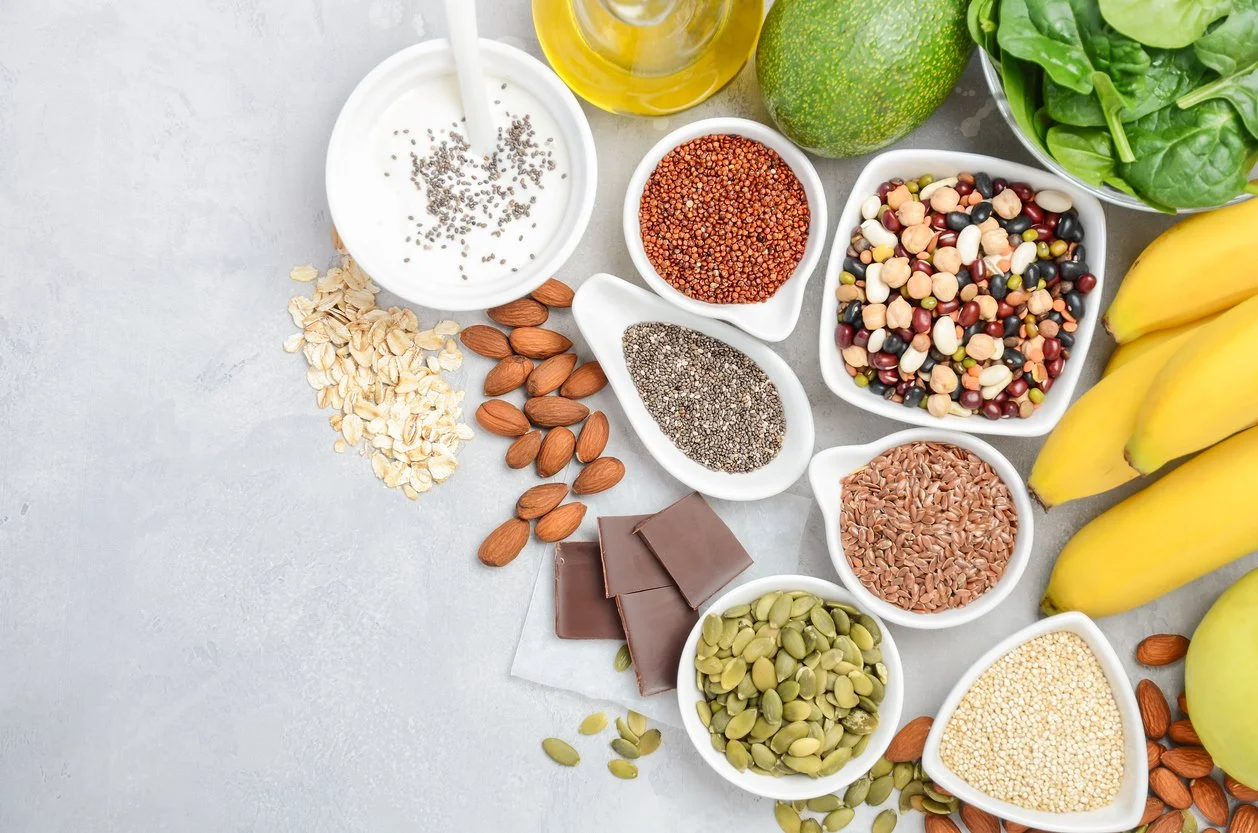
Some of the richest sources include spinach, Swiss chard, black beans, edamame, almonds, pumpkin seeds, quinoa, and dark chocolate (see additional sources and amounts here). Many women are surprised to learn that a simple cup of cooked spinach provides almost 40 percent of the daily value, and that adding nuts or seeds to snacks can meaningfully increase intake without a lot of effort.
Which Type of Magnesium Should You Take?
Supplements can be supportive when intake from food is not enough, but not all forms are absorbed equally.
| Type | Best For | What to Know |
|---|---|---|
| Magnesium Glycinate | Sleep and anxiety | Gentle on the stomach and supports calming neurotransmitters. Often the preferred form during perimenopause. |
| Magnesium Citrate | Constipation | Effective for regularity, but may be too strong for some women. |
| Magnesium Oxide | Not generally recommended | Poorly absorbed and often causes digestive discomfort. |
Here's a helpful article that reviews the different types of magnesium in more detail.
How Much Magnesium Do You Need?
QUICK SUMMARY
The recommended dietary allowance for adult women is 310 to 320 mg per day.
Some women may need more based on symptoms or absorption issues, but higher doses should always be discussed with a physician, because magnesium can interact with certain medications and can affect kidney function.
Source: National Institutes of Health
Women sometimes think that if a little is good, more must be better. Magnesium does not work that way. Too much can lead to nausea, diarrhea, or low blood pressure. Start low, increase slowly, and work with a healthcare provider who knows your history.
How to Buy a Magnesium Supplement
YOUR CHECKLIST
☐ Match the form to your goal. Glycinate for sleep and anxiety, citrate if constipation is your main concern.
☐ Skip magnesium oxide. It is poorly absorbed and often causes digestive discomfort.
☐ Know your target. 310 to 320 mg per day for most adult women.
☐ Start low and increase slowly.
☐ Talk to your physician first, especially if you take medication or have any kidney concerns.

How Do You Know If Magnesium Is Working?
The earliest signs are usually subtle. Sleep becomes deeper, you fall asleep more easily or wake fewer times during the night, and your muscles feel less tight in the morning.
Anxiety may feel less physically intense. Some women notice fewer headaches. Others describe a sense that their body feels more regulated instead of reactive.
One of my clients told me she did not realize how much tension she carried in her shoulders until it started to fade. She described it as a layer of static that disappeared in the background of her day.
Another woman noticed that her late afternoon cravings quieted after stabilizing her magnesium intake, which aligns with research showing magnesium's influence on glucose metabolism.
Keeping a symptom journal is incredibly helpful here. When you track sleep, mood, appetite, and physical sensations regularly, it becomes easier to see what is changing. This is exactly what we do inside the PEACE Method.
It is never just about adding a supplement. It is about observing your body with curiosity rather than frustration, and using that information to guide your next steps.
Frequently Asked Questions About Magnesium and Perimenopause
Possibly, though the research is still developing. A review on magnesium and vasomotor symptoms suggests that low magnesium may worsen hot flashes because it affects thermoregulation, serotonin pathways, and sympathetic nervous system activity (Orlofsky et al., 2021). Because perimenopausal and menopausal women are at higher risk of magnesium deficiency due to hormonal changes and dietary gaps, supplementation may help reduce symptom burden in some individuals. The authors do call for more robust research.
Magnesium is safe for most adults at recommended doses, but high amounts can cause nausea or diarrhea. People with kidney disease, or those taking medications such as antibiotics or PPIs, should consult their physician. The NIH Office of Dietary Supplements notes that supplement forms, not food sources, are the primary cause of adverse effects. Always consult with your provider before starting any new supplement.
Sleep improvements often appear within one to two weeks, though clinical trial data suggests it can take longer. In a randomized controlled trial on adults with insomnia, benefits appeared by eight weeks (Abbasi et al., 2012). Mood effects may take two to six weeks based on review data from Nutrients (Botturi et al., 2020). Timing varies depending on baseline deficiency and consistency.
Magnesium glycinate is typically preferred because it is well absorbed and supports the calming neurotransmitter GABA. Citrate can help with constipation. Oxide is poorly absorbed and often causes stomach discomfort. The best choice depends on your symptoms and medical history.
Final Thoughts: Supporting Yourself Through Perimenopause
Magnesium is not a cure for perimenopause, but it can be a supportive piece of the puzzle for many women. The research is growing and the early evidence connects magnesium to improved sleep, steadier mood, healthier muscles, and better metabolic function. When the body is under hormonal stress, having adequate magnesium gives your system one more tool to regulate itself.
This transition is easier when you stop pretending you should figure it out alone. Nutrition, movement, sleep, emotional support, and targeted supplementation all play a role. The women who feel the best during perimenopause are the ones who listen to their bodies and give themselves permission to get help.
If you are reading this and nodding because the symptoms feel familiar, you do not need to push through on willpower. The PEACE Method is where we take your symptoms, your lifestyle, your food patterns, and your goals and turn them into a plan that feels doable long term. This includes personalized guidance on nutrients like magnesium and support with food choices, cravings, mindset, and energy balance. If you want a clearer path through this season, you can apply for coaching and we will look at everything together.
References:
DISCLAIMER: The information contained in this post is not, and should not be construed as, medical advice. It is provided for informational purposes only. Each individual’s situation, nutritional needs, and medical situation are different, and the information contained in this post may not be appropriate for your personal situation. Always check with your own physician or medical professional before implementing any change to your lifestyle, food intake, exercise regimen, or medical treatment.
(C) 2026 Schuster Nutrition, PLLC

Article written by Melissa Schuster, MS, RDN, CDN, IFNCP
Melissa Schuster is a Registered Dietitian and mom of three. She helps busy moms transform their relationship with food through concierge virtual coaching so they can feel fantastic, lose weight for good, and focus on the things that matter most. With her signature PEACE Method which takes a whole-person approach, Melissa has helped hundreds of women find lasting peace in their bodies and around food. An expert in nutrition, Melissa holds a Masters in Clinical Nutrition and Dietetics from New York University and an Integrative and Functional Nutrition Certification.
The Newsletter
Want access to exclusive coaching offers, practical nutrition advice, and a healthy dose of mom-to-mom talk delivered straight to you? You’re in the right place!
